
We like to think of decisions as discrete, rational moments: pick A or B, move on. But in the messy life between morning coffee and bedtime emails, decisions accumulate like coins in a jar until the pile is heavy. This article looks at the psychology behind that weight — why choices feel harder as the day goes on, how that change shows up in behavior, and what practical steps you can take to stay sharp when it matters most.
what decision fatigue actually means
Decision fatigue describes the decline in the quality and ease of decisions after making many of them. At first the pattern is subtle: more hesitation, a heavier feeling about small choices. Over time those quirks compound into poorer trade-offs, avoidance, and impulsive shortcuts.
People experiencing decision fatigue might default to the easiest option, avoid decisions altogether, or simply procrastinate. The struggle is familiar — choosing what to eat, whether to reply to a message, or which version of a report to send can all feel disproportionately draining.
It helps to separate the phenomenon from moral failure or laziness. Decision fatigue is a cognitive pattern shaped by attention, motivation, and the design of environments rich in choices.
a short history of the idea
Interest in decision fatigue grew from research into self-control and willpower. In the late 1990s and 2000s, psychologists proposed the ego-depletion model: self-regulation relied on a limited resource that could be spent. When that resource ran low, subsequent acts of self-control suffered.
That model inspired both lab experiments and public fascination. The idea that willpower behaved like a muscle — strong after rest, tired after exertion — fit well with intuitive experience and practical advice about conserving energy for important tasks.
More recent scholarship has complicated the picture. Large multi-site studies and fresh theoretical work have pushed researchers to consider motivation, shifting priorities, and attention rather than a simple finite fuel tank. The result is a richer, more nuanced understanding that still recognizes decision quality declines after heavy mental work — but explains why in more complex ways.
the mechanisms beneath the feeling
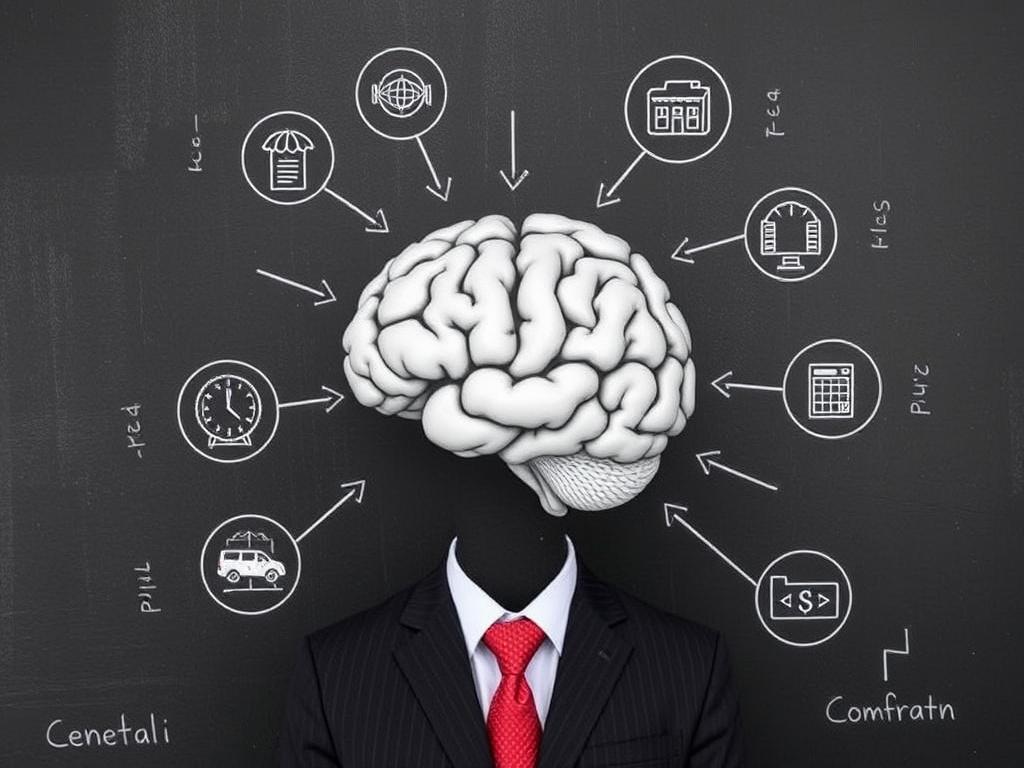
Several cognitive processes contribute to decision fatigue. First, attention is limited. Making choices requires focusing on options, predicting outcomes, and suppressing irrelevant impulses. With sustained demand, attentional control becomes less reliable and reaction time slows.
Motivation also shifts. After many choices, the brain can discount future benefits more heavily and favor immediate ease. That change looks like laziness but it’s a recalibration: when cognitive effort seems costly and rewards small, behavior shifts toward lower-effort options.
Memory and working memory load matter too. Keeping choices and constraints in mind consumes space in working memory. When that space fills, we rely on rules of thumb and habits rather than careful deliberation, which can be efficient but sometimes suboptimal.
neural players: prefrontal cortex and more
The brain regions most often implicated in choice-related control are in the prefrontal cortex, which supports planning, impulse suppression, and complex value comparisons. The anterior cingulate cortex helps monitor conflicts and signals when more cognitive effort is needed.
Neurotransmitter systems, like dopamine, shape how we weigh options and pursue rewards. Changes in these systems affect motivation and the willingness to exert cognitive effort. However, mapping a day’s weariness to a single chemical is overly simple; the brain uses distributed networks and shifting priorities drive much of the effect.
Neuroscience gives helpful clues but doesn’t reduce the phenomenon to a single cause. Decision fatigue emerges from interacting systems: limited attention, shifting motivation, and the costs of effortful thinking combine to make choices harder.
evidence from behavioral studies
Researchers have documented decision-quality shifts in lab tasks and real-world settings. After performing demanding cognitive tasks, participants are more likely to choose smaller, immediate rewards over larger delayed ones, and to show reduced persistence on difficult problems.
Field studies have produced striking headlines. For instance, research into judicial rulings reported that favorable rulings dropped as judges grew fatigued and rose after breaks. That pattern captured attention because it suggested how everyday cognitive dynamics can have serious consequences.
At the same time, scholars advise caution. Follow-up analyses and replication efforts showed that contextual factors and sample selection can exaggerate some findings. The consistent takeaway is modest: decision quality often declines with cognitive load and time-on-task, but the size and pervasiveness of the effect depend on context and the options available.
how decision fatigue shows up in daily life
On a small scale, decision fatigue turns benign choices into frustrating chores. Picking an outfit, deciding what to eat, or choosing a route home become annoyances rather than neutral acts. Those frictions ripple outward: you might snap at a colleague, forget to book a meeting room, or select a default without weighing the consequences.
At work, the cost can be strategic. Managers who face endless meetings and personnel decisions late in the day may rely more on heuristics — favoring familiar candidates or delaying choices. Entrepreneurs juggling product design, hiring, and finances can make riskier calls when overloaded. These patterns affect organizations deeply because small, repeated decisions compound into large outcomes.
In consumer contexts, decision fatigue helps explain why shoppers buy more impulsively after long browsing sessions or why menu items near the top of a list sell better. Marketing and design often exploit that tendency, nudging consumers toward the choices companies prefer.
personal example: an experiment in simplifying choices
I once committed to a two-week experiment: wear the same style of neutral clothing for weekdays and make simple, identical lunches. The aim was to retire dozens of micro-decisions from my day and watch the consequences. Within days I noticed more mental clarity during writing sessions and fewer late-afternoon dips in decision-making quality.
The experiment didn’t make me better at complex strategic choices, but it reduced friction and preserved willpower for the tasks I valued most. The simple change shows how minimizing low-stakes options can free cognitive bandwidth for higher-stakes thinking.
choice architecture: how environments shape fatigue
Choice architecture refers to how options are presented and structured. Small design differences — ordering of choices, default settings, and category labels — influence how much cognitive work choosing requires. Good architecture reduces unnecessary decisions and highlights meaningful differences.
For example, a crowded onboarding checklist that mixes urgent forms with optional reading increases cognitive load for new employees. Rearranging the materials into clear, prioritized steps reduces uncertainty and the number of decisions that demand conscious deliberation.
Designers, managers, and individuals can benefit from thinking about how environments create or remove decision tax. Thoughtful defaults, clearer categories, and staged choices all reduce the cumulative burden on decision-makers.
table: quick comparison of common choice designs
| Design feature | Effect on decision load | When to use |
|---|---|---|
| Clear defaults | Reduces decisions for routine matters | When one option suits most people |
| Staged choices | Breaks complex choices into smaller steps | When decisions require multiple criteria |
| Reduced options | Lowers cognitive search costs | When many similar alternatives overwhelm |
practical strategies to prevent or recover from fatigue
There are immediate, practical tactics to lighten the burden. Short breaks restore attentional control more effectively than forcing through tasks. Brief physical activity, stretching, or stepping outdoors reorients focus and often helps more than a quick snack.
Another effective tactic is precommitment: decide in advance for future choices. Laying down rules — for instance, «I’ll exercise at 6 a.m. three times a week» — removes the daily negotiation about whether to do it. Rules convert repeated deliberations into single, front-loaded decisions.
Third, apply prioritization. Identify high-quality decisions that need fresh attention and schedule them early, when cognitive resources are richest. Save low-stakes or routine choices for later or automate them entirely with habits and defaults.
immediate tactics: a short checklist
- Take a 10–20 minute break after intense work; step away from screens.
- Hydrate and, if needed, eat a balanced snack — not a sugar crash.
- Use a timer (the Pomodoro technique) to alternate focused work and rest.
- Reduce incoming choices: close tabs, silence nonessential notifications.
longer-term habits that build resilience
Developing stable routines saves decision energy. Morning rituals, standard meal plans, and automated bill payments turn frequently repeated choices into habits that require minimal conscious effort. Over time, those freed resources can be invested in genuinely novel or high-impact decisions.
Sleep and exercise play a foundational role. Poor sleep impairs attention and emotional regulation, increasing susceptibility to decision fatigue. Regular physical activity boosts mood and cognitive stamina, making it easier to sustain deliberation across longer stretches.
Finally, practice meta-decision making: decide how you will decide. When you set a decision rule for a class of choices, you remove the need to deliberate each instance. This principle is a force multiplier: a one-time investment in a rule saves dozens or hundreds of small decisions.
tools and systems that help
Technology offers helpers that range from the banal to the transformative. Calendar tools, automation apps, and simple checklists capture recurring decisions and trigger actions without new deliberation. These tools shift cognitive labor from in-the-moment choice to upfront design.
For teams, decision logs and RACI charts (who is Responsible, Accountable, Consulted, and Informed) reduce ambiguity. When roles are clear, groups avoid needless reruns of the same argument and reduce the number of people who must weigh in on routine matters.
Algorithmic decision aids are becoming more common in hiring, credit scoring, and medical triage. They can reduce human cognitive load but bring trade-offs: opaque models can obscure biases, and overreliance may dull human judgment where context matters most.
organizational approaches to reduce collective fatigue
Institutions can design schedules and policies to counteract decision fatigue. For example, limiting back-to-back high-stakes meetings, encouraging «meeting-free Fridays,» and structuring evaluation times earlier in the day help preserve strategic clarity for critical choices.
Leaders can also divide decision responsibility. Rotating lower-stakes decisions among team members spreads cognitive load and helps maintain engagement. Clear escalation paths ensure that only genuinely consequential matters reach senior leaders.
Finally, cultivating a culture that normalizes rest and boundaries reduces the stigma of taking breaks. When teams accept that mental recovery is part of professional performance, decision quality improves and burnout risk falls.
when decision fatigue has ethical consequences
Decision fatigue bears ethical weight when it affects fairness and safety. If judges, doctors, or hiring managers make systematically different choices depending on time of day or workload, the consequences can create inequities. Institutions should be alert to such patterns and design processes that protect vulnerable outcomes.
For individuals, recognizing how fatigue biases judgments can reduce harm. Simple policies — like scheduling sensitive conversations early — protect others from being subject to poor decisions made at the wrong moment.
Transparency matters too. If organizations use fatigue-prone times for certain tasks, they should disclose that risk and take steps to mitigate it. Ethical design is as much about acknowledging human limitations as it is about patching them.
case example: hiring decisions
Consider a hiring committee that meets for six hours to interview candidates. Early interviews are often longer and deeper; later ones can suffer from shorter attention spans and a tendency to default to safe choices. The result is inconsistent evaluation across candidates who happen to be scheduled early or late.
Simple fixes improve fairness: limit total interview time per day, include breaks after every two or three interviews, and use standardized rubrics so later reviews compare candidates against the same criteria. These changes reduce the influence of transient fatigue on career-defining outcomes.
measuring decision fatigue in practice
Measuring decision fatigue is tricky because it’s a process, not a single observable event. Researchers combine behavioral indicators — more errors, shorter deliberation time, increased reliance on defaults — with self-report measures of effort and exhaustion.
In workplaces, proxy metrics can include time-of-day patterns in task completion, variability in judgment outcomes across sessions, or changes in the frequency of escalations to senior staff. Surveys that ask about perceived difficulty for routine choices also offer signals.
Any measurement approach should account for confounds: time of day effects can reflect circadian rhythms, workload, or the difficulty of specific tasks. Combining multiple data sources gives the best picture.
common myths and misperceptions
It’s tempting to think of decision fatigue as purely about ego depletion or willpower running out like battery power. That model is useful up to a point, but it ignores motivation, context, and the brain’s adaptive biases toward conserving effort.
Another myth is that fatigue can be eliminated with a single trick. Short-term tactics help, but systemic change — restructured schedules, clearer roles, and better defaults — has far more lasting impact. Quick fixes often treat symptoms rather than root causes.
Finally, people sometimes assume only certain personalities get tired from decisions. In reality, while individual differences exist, virtually everyone faces increased cognitive costs with prolonged choice demands; the differences are mostly about resilience and the availability of restorative habits.
how to build a decision-friendly day
Designing a day that preserves decision capacity begins with sequencing. Put your most important, cognitively demanding tasks in the morning or after restorative breaks. Reserve routine administrative tasks for later when precision matters less.
Next, reduce the number of decisions you face. Batch similar tasks, establish defaults, and codify preferences. A weekly menu plan, a set wardrobe, or a standardized meeting agenda all lower the tally of daily choices.
Finally, schedule recovery. Brief naps, walks, and screen-free intervals help restore attention and mood. Think of these as maintenance rather than indulgence; they pay dividends in sustained clarity and better outcomes.
daily checklist for a decision-friendly routine
- Start with a two-hour window for priority work before meetings.
- Limit decision-heavy meetings to two per day and cluster administrative work in one block.
- Use rules and defaults for recurring choices (meals, outfits, communications).
- Take a restorative break every 90–120 minutes.
designing systems that scale
When teams grow, informal rules break down and decision load rises. Systems that scale — clear roles, decision matrices, and standardized workflows — prevent the combinatorial explosion of choices that swamps managers and staff alike.
One practical tool is the decision register: document significant decisions, the rationale behind them, and who approved them. This practice reduces rehashing and helps new team members understand historical trade-offs without redoing the mental work.
Another scalable solution is modularization. Break large projects into independent modules with local decision authority. That model reduces the number of stakeholders needed for each decision and keeps momentum moving without constant escalation.
what to do when you notice the telltale signs
When you feel the fog — indecision, irritation, or reliance on defaults that feel off — apply a short rescue protocol. Pause, breathe, and do a quick triage: which decisions are urgent, which can wait, and which can be automated or delegated?
Try a 10-minute reset: step outside, stretch, and drink water. Then pick one small, clear task and complete it. Completing even a minor task can rebuild a sense of agency and reduce the cascade of avoidance that often follows decision fatigue.
If the feeling persists over days, reassess schedules and responsibilities. Chronic weariness around choices usually reflects structural overload rather than a temporary dip in energy.
final thoughts on living with fewer poor choices

Decision fatigue isn’t a moral failing; it’s a consequence of a human brain that evolved to economize effort. Recognizing the pattern gives power: you can rearrange schedules, create rules, and design environments so that cognitive energy goes to where it matters most.
Small changes compound. A simpler morning routine, a prioritized task list, and a culture that respects breaks will reduce the number of moments where fatigue steers outcomes. Those shifts don’t remove hard choices, but they make the important ones clearer and fairer.
Try a targeted experiment on your calendar for a month: protect a morning block for high-value thinking, standardize three routine decisions, and add two short restorative breaks per day. Observe the difference. Over time these tiny adjustments can make complex decisions feel less like resource-draining marathons and more like purposeful steps toward the outcomes you care about.