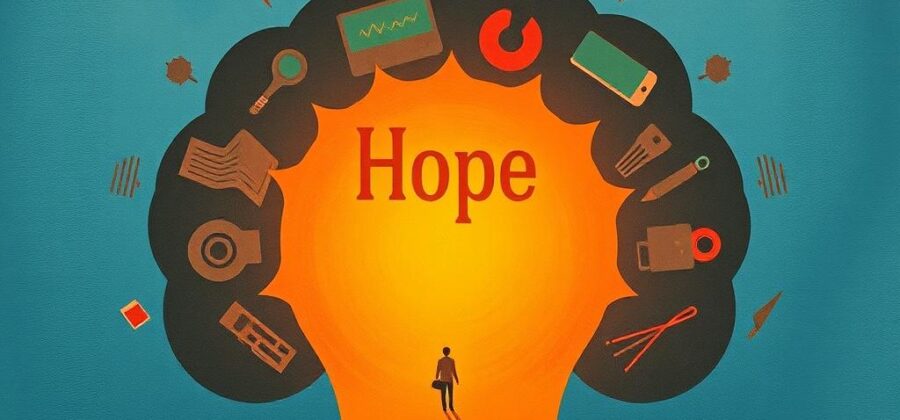
Hope is the quiet engine under many of our biggest choices. It nudges someone to apply for a job after rejection, keeps a caregiver awake with plans for tomorrow, and seeds communal action in the face of disaster. This article explores how hope works in the mind, how it shapes behavior and health, when it can mislead us, and how we can cultivate a resilient, practical form of hope that actually helps people move forward.
Defining hope: what it looks like in the mind and daily life

Hope is not a single emotion like joy or fear but a future-oriented cognitive state that combines wanting and believing. It involves imagining a desired outcome and perceiving some route toward that outcome, alongside the motivation to pursue it. That combination—desire for a goal plus a sense of possible paths—distinguishes hope from vague wishing.
In everyday life, hope shows up as planning and experimentation. A student who maps out steps to improve grades, a parent who lines up resources for a child, or a patient who adheres to a treatment plan because they see a way forward: these are all manifestations of hope. It is an active stance, not passive longing.
Historical and theoretical perspectives
Psychologists and philosophers have debated hope for centuries, but modern psychological frameworks emphasize cognition and agency. One influential model breaks hope into two components: agency—the motivational drive to reach a goal—and pathways—the perceived ability to generate routes to that goal. Together, these elements predict persistence and creative problem solving.
Other traditions frame hope in social and existential terms. Psychoanalytic and existential writers treat hope as a resource that gives life meaning, while social psychologists study how hope is shaped by group narratives and social norms. These perspectives complement each other: hope is both an individual mental skill and a product of relationships and culture.
Neuroscience of hope: what the brain does when we look forward
Neuroscientific research suggests that hope engages brain networks involved in planning, reward, and emotion regulation. The prefrontal cortex helps generate and evaluate potential routes to goals, while dopaminergic pathways contribute to the motivation and expectancy that make action seem worthwhile. In other words, parts of the brain that imagine futures and parts that value them work together.
Stress physiology also interacts with hopeful thinking. Chronic stress can blunt the brain’s reward systems and make it harder to see viable pathways, while regulated stress responses and supportive environments help preserve the cognitive resources needed for hopeful planning. This is why hope can feel fragile during prolonged hardship and why restoration of safety can re-open possibilities.
Hope versus optimism, faith, and resilience

The words hope, optimism, faith, and resilience are often used interchangeably, but they are distinct. Optimism is a general expectation that things will turn out well; hope is more goal-specific and process-oriented. Faith often connotes trust in a person or system beyond oneself. Resilience describes the capacity to recover from setbacks, which is frequently supported by hope but is broader than it.
Practically, optimism can coexist with a lack of concrete plans, while hope typically entails both a valued outcome and an assessment of possible routes. Resilience benefits from hope because having actionable pathways and continued motivation helps people rebound rather than merely endure.
Snyder’s hope theory: agency and pathways in practice
Clinical researcher C. R. Snyder formalized a theory that has guided much empirical work on hope. He defined hope as a cognitive motivational system composed of agency (the will) and pathways (the ways). According to this framework, hopeful people are more likely to set goals, generate multiple strategies, and reposition when faced with obstacles.
Researchers developed measurement tools based on this framework, and studies have linked higher hope scores to better academic performance, healthier coping with illness, and greater persistence in challenging tasks. The practical takeaway is that hope is trainable: interventions that increase planning skills and motivation can raise people’s sense of hope.
How hope influences behavior and decision-making
Hope guides attention toward goal-relevant information and biases decisions toward actions that increase the likelihood of desired outcomes. When someone believes a goal is attainable, they allocate time and effort, seek resources, and tolerate short-term discomfort for long-term gain. This makes hope a powerful behavioral engine.
At a cognitive level, hopeful people show greater problem-solving flexibility. They generate alternative strategies when the first plan fails and maintain a sense of agency that prevents early abandonment. In this way, hope fuels persistence and adaptive learning rather than rigid repetition of ineffective attempts.
Hope and health: psychological and physical outcomes
Hopeful outlooks associate with better mental health, lower levels of depressive symptoms, and enhanced coping with chronic illness. Patients who can envision achievable treatment goals and believe in their ability to follow through often show greater adherence to regimens and better quality of life. Hope does not cure disease by itself, but it helps people engage with care and find meaning in difficult circumstances.
Physiologically, hope-related behaviors—such as maintaining routines, seeking social support, and managing stress—affect biological systems tied to health. While the exact pathways remain an area of active study, the link between purposeful action driven by hope and improved health outcomes is consistent across many contexts.
Measuring hope: scales and qualitative approaches
Psychologists use standardized scales to evaluate hope, with the most widely known being measures derived from Snyder’s theory. These instruments assess agency and pathways beliefs, producing a score that correlates with goal-directed behavior. Clinicians use them to identify strengths and gaps in clients’ future-directed thinking.
Qualitative methods complement quantitative scales by capturing the narratives that shape hope. Interviews and diaries reveal how people construct stories about the future, where they locate responsibility, and which social supports matter. These rich accounts often uncover cultural meanings of hope that numeric scales miss.
Interventions to build hope: practical techniques
Therapeutic approaches aim to strengthen both agency and pathways. Cognitive-behavioral techniques reframe limiting beliefs, motivational interviewing clarifies values and boosts commitment, and goal-setting exercises break large aims into doable steps. Narrative therapy helps reshape personal stories so they include overcoming obstacles rather than being dominated by them.
Simple practices can be implemented outside therapy. Writing a future-self letter, mapping multiple pathways to a goal, and using implementation intentions («If X happens, I will do Y») turn abstract hope into operational plans. Rehearsing small wins builds momentum and feeds back into motivation.
Examples of interventions and their uses
Below is a concise table showing a few common interventions and practical examples of how they are used. The table highlights how different approaches target either motivation, planning, or both.
| Intervention | Targets | Example |
|---|---|---|
| Goal decomposition | Pathways | Breaking a job search into daily tasks: networking, resume edits, and applications |
| Motivational interviewing | Agency | Exploring personal values to strengthen commitment to sobriety |
| Future-self visualization | Agency and pathways | Writing a letter from the perspective of a healthier, more accomplished self |
Social and cultural influences on hope
Hope is shaped by relationships and community narratives. Family expectations, peer networks, and cultural scripts about what is possible all modulate how people imagine futures. In some cultures hope is tethered to collective projects; in others it centers on individual achievement.
Public institutions and media also influence hope. Clear communication from leaders, visible plans for recovery after a crisis, and stories of successful change can nudge collective mood and mobilize action. Conversely, persistent inequality and broken promises erode hope and reduce the perceived viability of pathways to improvement.
Collective hope: movements, rituals, and shared futures
Collective hope arises when groups imagine and pursue shared goals. Social movements often thrive on narratives that a better future is not only desirable but attainable through coordinated action. Rituals and ceremonies can reinforce these narratives, create solidarity, and sustain motivation over time.
Collective hope differs from individual hope because it depends on trust in others’ contributions and institutional supports. It is fragile when social cohesion breaks down, but it becomes powerful when communities build predictable structures that translate belief into concrete change.
When hope becomes harmful: distinguishing adaptive from maladaptive hope
Hope can be maladaptive when it becomes denial or prolongs harmful patterns. False hope—clinging to outcomes with no viable pathways—can prevent acceptance, block prudent planning, and waste resources. In medical contexts, families sometimes pursue treatments with minimal likelihood of benefit because the absence of hope feels unbearable.
Another risk is hope that ignores trade-offs, leading to repeated risky decisions in gambling or addiction. The fix is not to extinguish hope but to align it with realistic assessment and contingency planning. Healthy hope accepts constraints while seeking the best available paths within them.
Balancing hope and realism: practical guidelines
Effective hope combines aspiration with critical appraisal. Start by clarifying values and then identify multiple pathways with realistic timelines and checkpoints. Build contingency plans so that when a chosen route stalls, alternatives are ready. This keeps motivation intact without slipping into obstinacy.
Accountability and feedback loops help maintain this balance. Regular reviews of progress, honest conversations with trusted others, and readiness to revise goals protect against the sunk-cost trap where people pursue an unworkable course because they already invested heavily in it.
Cultivating hope: daily practices and exercises
Hope is a skill that benefits from deliberate practice. Below are practical exercises that people can use to strengthen both agency and pathways in their own lives. They are short, repeatable, and can be adapted to different goals and circumstances.
- Goal chunking: Break a long-term goal into weekly and daily tasks to make progress visible.
- Pathway brainstorming: List at least three different ways to approach a goal, including unconventional options.
- Future-letter writing: Compose a letter from your future self describing how you achieved a particular aim and the steps taken.
- Implementation intentions: Create clear «if–then» plans for anticipated obstacles.
- Savoring and gratitude: Record small wins and supportive acts to reinforce the sense that effort pays off.
Each of these practices builds a cognitive and emotional scaffold that supports sustained effort. Over time, small successes compound into stronger expectations that future goals are attainable.
Hope in therapy: clinical techniques and outcomes
Clinicians integrate hope-building into many therapeutic modalities. Cognitive-behavioral therapy addresses hopeless thinking by testing beliefs about controllability and success, while solution-focused therapy emphasizes tiny, achievable changes that create momentum. Motivational interviewing is particularly useful when ambivalence blocks action.
Research indicates that increased hope during therapy correlates with better outcomes across disorders, from depression to chronic pain. This highlights that hope is not merely a byproduct of improvement but an active ingredient that can be targeted to enhance treatment effectiveness.
Hope across the lifespan: children, adolescents, adults, and elders
Development shapes how hope is experienced and fostered. Children often express hope through play and imaginative futures; supporting autonomy and problem-solving in early years builds the foundation for later goal-directed thinking. Adolescents benefit from mentoring that helps them identify plausible pathways during a time of identity exploration.
Adulthood brings a focus on realistic planning, role responsibilities, and balancing competing goals. In later life, hope often shifts toward maintaining dignity, connection, and meaningful projects. Interventions for older adults that emphasize mastery and social engagement can rekindle active hope even amid losses.
Hope and education: promoting agency in classrooms

Educators can foster hopeful students by combining clear expectations with opportunities for mastery. Teaching planning skills, encouraging multiple strategies for problem solving, and celebrating incremental progress help students internalize both agency and pathway thinking. Mentoring relationships provide social reinforcement for these emerging habits.
Classroom practices that normalize setbacks as learning opportunities also preserve hope. When failure is framed as feedback, students are more likely to generate alternative routes rather than surrendering to helplessness. This orientation matters more than innate ability for long-term achievement.
Workplace hope: leadership and organizational climate
Leaders influence workplace hope through transparency, coherent strategy, and recognition of meaningful progress. When managers articulate clear goals and plausible pathways—while also supporting employees through obstacles—teams stay motivated and creative. Conversely, mixed messages and shifting priorities erode the pathways people need to feel hopeful.
Organizations can encourage hope by enabling autonomy, offering skill development, and creating small, visible wins that show strategy working. These practices reduce cynicism and increase willingness to take the kinds of calibrated risks that produce innovation.
Cultural narratives and hope: stories we tell ourselves
Stories and metaphors shape how people imagine possible futures. Narratives that frame challenges as solvable trials encourage exploratory behavior, while fatalistic scripts dampen initiative. Cultural artifacts—books, films, public speeches—contribute to the collective repertoire of hopeful images.
Changing narratives at scale is challenging but possible. Community arts projects, public history, and media that spotlight incremental successes can shift expectations about what is achievable. These cultural shifts alter social incentives and make hopeful thinking more plausible for more people.
Technology, social media, and hope: opportunities and pitfalls
Digital platforms can amplify both hope and despair. On one hand, they connect people to resources, models, and communities that expand perceived pathways. On the other hand, curated images of success can produce unrealistic comparisons that undermine agency. The effect depends on how technology is used and the social norms it reinforces.
Designing digital tools that scaffold goal setting, track small wins, and facilitate supportive feedback can make technology a vehicle for hope. Conversely, platforms that prioritize sensational updates and superficial metrics may weaken the practical planning skills that sustain genuine hope.
When hope meets ethics: promises, responsibility, and power
Hope has ethical dimensions because public and private actors can wield it—intentionally or not—to motivate behavior. Leaders who promise change bear responsibility for creating credible pathways; otherwise, their rhetoric can become manipulative. Ethical use of hope requires aligning words with feasible plans and acknowledging constraints honestly.
At the interpersonal level, offering hope means assessing whether support will empower someone or simply comfort them temporarily. The most humane responses combine empathy with concrete assistance that expands the person’s capacity to act.
Research frontiers: open questions in hope science
Researchers continue to probe precisely how hope interacts with neural plasticity, social networks, and long-term health. Questions remain about the most effective ways to scale hope-building interventions in low-resource settings and how digital tools can be responsibly deployed. Longitudinal studies are needed to map how hope dynamically shifts across life events and social conditions.
Another frontier is distinguishing which elements of hope are most malleable across different populations. Tailoring interventions to cultural contexts, developmental stages, and clinical needs will improve both efficacy and ethical practice.
How I’ve seen hope at work: a personal note
In my own community work after a neighborhood flooding event, I watched hope operate like a series of lit matchsticks. One resident’s practical checklist about salvageable items inspired neighbors to coordinate resources and form rotating clean-up teams. That visible plan drew more volunteers and slowly transformed despair into measurable progress.
What struck me was how quickly agency and pathways fed each other. Practical steps made the future believable, and belief motivated more action. Hope, in that context, was not a slogan but a set of small, repeatable behaviors that aggregated into real recovery.
Practical roadmap: building hope in everyday life
Below is a compact sequence you can apply in most situations where you want to increase your capacity for constructive hope. The steps are intentionally simple so they can be repeated and adjusted as circumstances change.
- Specify a meaningful goal that aligns with your values.
- Brainstorm multiple pathways to that goal, including unlikely options.
- Choose one path and break it into daily or weekly tasks.
- Create implementation intentions for common obstacles.
- Track small wins and revise plans based on feedback.
- Seek social support and be willing to ask for concrete help.
Following these steps doesn’t guarantee success, but it shifts thinking from passive wishing to active, adaptive problem solving. Over time, the repeated practice strengthens both confidence and strategic thinking.
Signs that hope is growing—and when to seek help
Indicators of increasing hope include clearer goal statements, more frequent generation of alternative strategies, higher willingness to try again after setbacks, and improved mood linked to planning rather than avoidance. Social signs include reaching out to others for help and offering plans in collaborative settings.
If someone is stuck in chronic despair—marked by pervasive hopelessness, withdrawal, or impaired functioning—professional help is warranted. Clinicians can diagnose and treat underlying conditions and use targeted interventions to rebuild agency and pathways thinking.
Practical pitfalls and how to avoid them
Two common pitfalls undermine hopeful efforts: overconfidence in a single path and underinvestment in feedback. Avoid the first by diversifying strategies; avoid the second by scheduling regular check-ins and being willing to adapt. Both errors are cognitive habits that can be corrected with simple structural changes.
Another pitfall is isolating hope as an inner attitude while neglecting the social and material supports that make pathways real. Pairing personal planning with community engagement and resource mapping increases the likelihood that hope leads to action rather than frustration.
Final reflections: hope as a practice, not a feeling
Hope is most useful when treated like a skill to practice rather than a passive emotion to be waited for. It requires intentionality—setting meaningful goals, generating alternatives, and building social and material scaffolding that turns imagination into action. When those elements align, hope becomes a durable force for change.
In both private and public life, hope that is grounded in realistic pathways and bolstered by social support has the power to transform uncertainty into purpose. That transformation is rarely instant, but with repeated, deliberate practice it becomes a reliable ally in meeting life’s challenges and shaping better futures for ourselves and others.