
Most of us can name moments when fairness mattered more than any abstract principle — a teacher who graded too harshly, a city that placed burdens unevenly, a courtroom drama on the evening news. That visceral sense, the tightness in the chest when we smell an injustice, springs from a tangle of cognition, emotion, and social wiring. This article untangles that web, exploring how people form judgments about what is right, how bias and identity shape those judgments, and what this means for designing fairer institutions.
What we mean by justice: concepts and distinctions
Justice is not a single thing. Philosophers and social scientists distinguish procedural fairness (fair processes), distributive fairness (fair outcomes), and restorative justice (repairing harm), and those distinctions matter because people react differently to each. A fair process can legitimize an unfavorable outcome, while a fair outcome rendered through an unfair process can leave people resentful.
Everyday language collapses these distinctions. When someone says «justice was served,» they may mean punishment, repair, compensation, or simply acknowledgment. Understanding which version of justice is at stake clarifies why debates about the same case can become so heated and so intractable.
Foundations of moral judgment: how people decide what’s fair
Human moral judgment blends intuitive feeling and slow reflection. Psychologists describe a dual-process model: rapid, intuitive reactions often guide our first impressions, and slower deliberation can revise or justify those impressions. This interplay explains why we sometimes «know» something feels wrong before we can explain why.
Cultural learning and early experiences set the moral vocabulary we use. Children internalize norms about sharing, punishment, and apology before formal reasoning develops, and these early patterns remain influential in adult responses to injustice. That makes context and upbringing key to understanding disagreements about fairness.
Moral foundations and cultural variation
Moral Foundations Theory proposes several innate psychological systems — such as harm/care, fairness/reciprocity, loyalty, authority, and purity — that cultures emphasize to different degrees. People prioritize different foundations based on upbringing, politics, and community norms, shaping what they consider just. For example, a policy seen as fair by one group might be an attack on authority or loyalty for another.
These foundations help explain cross-cultural conflicts. Appeals to «universal» fairness often fail because what looks like a neutral principle is entangled with values that others weigh differently. That is one reason negotiations and policy debates stall: the parties are operating with different moral lexicons.
Cognitive shortcuts that shape judgments of fairness
Our brains economize. Heuristics — mental shortcuts — let us make rapid judgments but also introduce systematic errors when applied to complex social situations. When people evaluate blame, punishment, or compensation, heuristics can produce predictable distortions that affect individual decisions and institutional outcomes.
Recognizing those heuristics is an essential first step toward correcting biased judgments. Organizations and legal systems that ignore them risk reproducing unfair outcomes even when actors intend to be impartial.
Common biases and their effects
Several biases recur in justice-related contexts: blame is often assigned to the most salient actor (salience bias), people overweight recent information (recency bias), and they look for causal narratives that make sense rather than accurate statistical patterns (narrative bias). Each of these shifts responsibility and shapes punitive responses.
Confirmation bias leads people to accept evidence that fits their preexisting view of a person’s character and dismiss information that contradicts it. In courtrooms and workplaces, this bias can lock investigators and jurors into a premature theory of the case, making corrective deliberation difficult.
Table: cognitive bias, typical effect, and example
| Bias | Typical effect | Concrete example |
|---|---|---|
| Confirmation bias | Selective evidence seeking | A prosecutor focuses on witness statements that support guilt and discounts alibi evidence |
| Fundamental attribution error | Overemphasis on character over situation | Assuming a driver is reckless rather than considering a medical emergency |
| Outcome bias | Judging decisions by results rather than process | Praising a risky strategy because it «worked» despite poor reasoning |
| Moral luck | Blaming or praising based on chance outcomes | Harsh judgment of someone whose mistake caused harm while a similar unharmful mistake draws forgiveness |
Emotion, empathy, and moral outrage
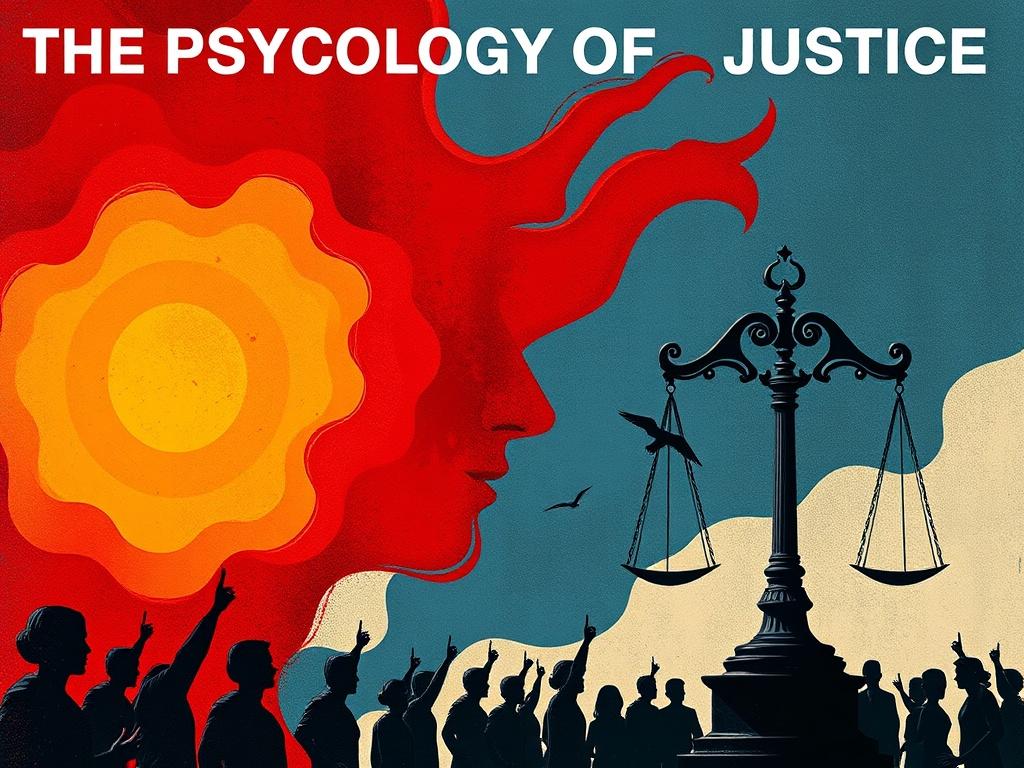
Emotion is not mere noise in moral reasoning; it is a primary engine. Moral outrage motivates protest and collective action, but it also narrows perspective and elevates punishment as the preferred remedy. Anger tends to produce retributive impulses, while compassion nudges toward reparative responses.
Empathy often seems uniformly positive, yet it can be selective. People empathize more with individuals than with statistics; they respond more strongly to vivid stories than to aggregated suffering. This empathy gap skews who receives help and who is punished.
How disgust and anger diverge
Disgust and anger are both moral emotions but they operate differently. Disgust often relates to purity violations and can drive exclusionary policies, whereas anger centers on perceived harm and unfairness. Understanding which emotion dominates a debate helps predict whether solutions will be exclusionary or punitive.
Campaigns and advocates can harness these emotions strategically, which explains why rhetoric matters so much. Appeals that generate empathy for victims can reduce support for harsh punishment, while framing an issue to induce disgust can harden support for exclusion or severe sanctions.
Social identity, group dynamics, and notions of fairness
Justice judgments are social. We evaluate fairness through the lens of group membership, competing identities, and norms that signal who belongs and who doesn’t. In-group favoritism can make identical acts look like betrayal or heroism depending on who commits them.
Groups also set the frame for what counts as a legitimate grievance. Power dynamics shape whose complaints are heard and whose are dismissed, perpetuating structural inequities even in systems that profess neutrality.
Dehumanization and moral exclusion
When opponents are dehumanized, moral constraints loosen. Empathy collapses and punitive instincts intensify. Historical atrocities and contemporary conflicts alike show how labeling groups as less than human reduces the political cost of harm.
Countering moral exclusion requires deliberate outreach and narrative strategies that rehumanize. Restorative practices, storytelling, and institutional cultures that highlight shared vulnerability can expand the circle of moral concern.
Punishment, retribution, and the variety of justice goals
When society reacts to wrongdoing, it can pursue several aims: retribution, deterrence, rehabilitation, or restoration. Each aim embodies different assumptions about human agency and social order, and each produces divergent policies and practices. Debates about sentencing, for instance, are often disguised arguments about which aim should dominate.
Retributive justice satisfies a basic human desire for balance: the idea that harm creates an obligation to impose a cost on the wrongdoer. That sense of balance is emotionally powerful but can clash with evidence about what reduces future harm and recidivism.
Comparing approaches to justice
Restorative approaches focus on repairing relationships and addressing the needs of victims and communities, often reducing recidivism and improving victim satisfaction. Rehabilitative models aim to change offender behavior through education, therapy, or treatment. Deterrence emphasizes future consequences to prevent wrongdoing. Each approach requires different institutional designs and different measures of success.
Shifts from retribution to rehabilitation or restoration often encounter political and emotional resistance because the first impulse after harm is to see wrongdoing as a moral stain that must be cleansed. Changing that impulse requires both persuasion and experimenting with alternative practices that demonstrate effectiveness.
Decision making in legal contexts: judges, juries, and institutions
Courtrooms put these psychological processes under pressure. Judges and jurors bring their own heuristics, experiences, and moral frameworks into deliberation. Procedural safeguards — rules of evidence, standards of proof, jury instructions — attempt to mitigate bias but cannot eliminate it entirely.
Institutional design matters. The adversarial system relies on competing narratives that both highlight and obscure facts, while inquisitorial systems distribute decision-making differently. Each design channels cognitive tendencies in particular ways, for better or worse.
How juries form collective judgments
Juries operate by blending individual judgments into a group deliberation that is subject to social influence, leadership dynamics, and persuasive argumentation. Social psychologists find that early majority opinions and assertive individuals can disproportionately shape outcomes. Diversity in juries tends to improve deliberation quality by bringing multiple perspectives to bear.
Plea bargaining reveals another dimension: many outcomes never reach juries because defendants accept deals shaped by perceived risks of trial. That process concentrates power in negotiating parties and can compound disparities when defendants lack resources or trust in the system.
What neuroscience adds to our understanding
Neuroscience does not offer simple answers, but it illuminates the brain systems involved in moral evaluation. Regions implicated in empathy, like the anterior insula and the anterior cingulate, interact with areas associated with deliberative control, such as the prefrontal cortex. The balance among these regions influences whether a person reacts primarily with emotion or with calculation.
Brain imaging studies also show that perceived intentionality activates different neural circuits than accidental harm, which matches behavioral evidence that intent heavily factors into blame judgments. These findings reinforce that legal systems’ focus on mens rea — guilty mind — has deep psychological roots.
Measuring perceptions of justice: methods and challenges
Researchers measure justice perceptions using surveys, controlled experiments, field interventions, and implicit measures that probe automatic attitudes. Each method has strengths: experiments reveal causal mechanisms, surveys capture large-scale patterns, and field studies test real-world applicability. Combining methods yields the most reliable insights.
However, measurement brings pitfalls. Self-reports are vulnerable to social desirability biases; lab tasks may lack ecological validity. Researchers increasingly use mixed methods and longitudinal designs to track how judgments develop and change over time.
Interventions to reduce bias and improve fairness
There are practical levers to nudge systems toward fairer outcomes. Blind review processes, structured decision-making protocols, and checklists reduce reliance on heuristics. Training aimed at awareness combined with systems changes tends to outperform training alone, which can produce temporary awareness without changing behavior.
Procedural transparency — explaining how decisions were made — also increases perceived legitimacy, even when outcomes are unfavorable. People care about having been heard and treated respectfully, not only about receiving a particular result.
List: promising practices for institutions
- Implement structured decision checklists to reduce bias in hiring, sentencing, and promotions.
- Use anonymized evaluations where possible to prevent identity-based discrimination.
- Provide procedural explanations and opportunities for voice to increase perceived fairness.
- Invest in restorative processes that center victims and communities in problem-solving.
- Monitor outcomes for disparate impact and adjust policies accordingly.
Policy implications: designing systems aware of human psychology
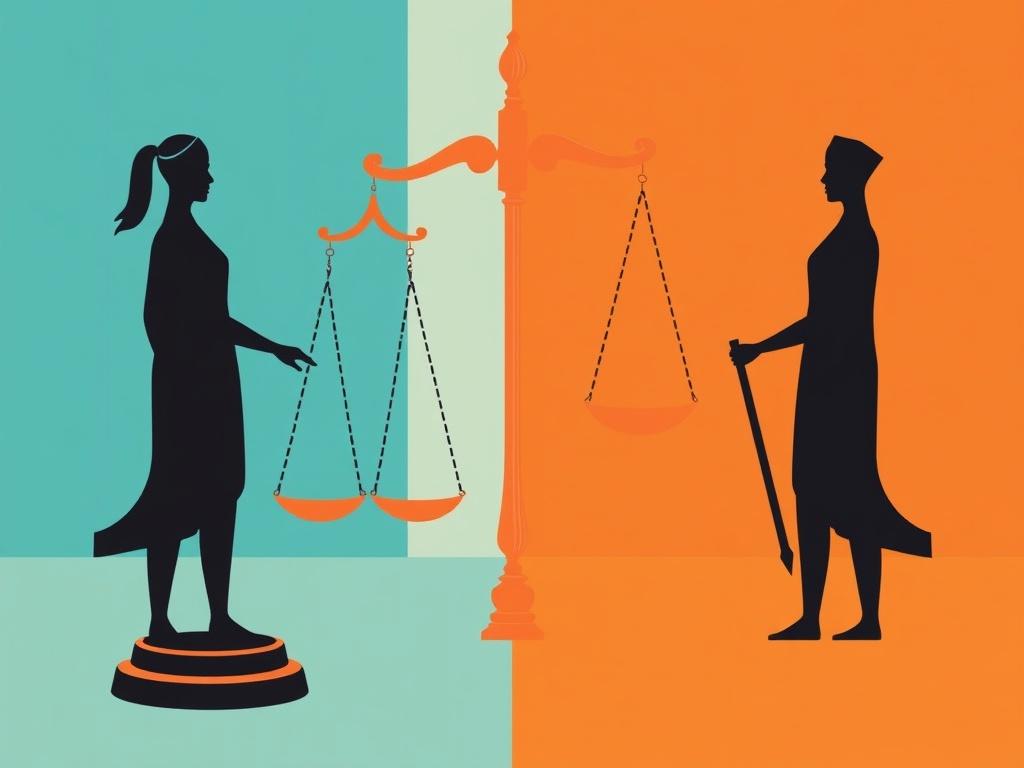
Policy-makers who understand how people perceive fairness can craft institutions that are both effective and legitimate. For instance, investing in community-based restorative programs may reduce re-offense while also satisfying victims’ need for acknowledgment — a dual win that purely punitive systems often fail to achieve.
Transparency and consistent rules reduce uncertainty and the sense that decisions are arbitrary. Those procedural improvements build trust over time, which is a resource that pays dividends in civic cooperation and voluntary compliance with laws.
Balancing emotions and evidence in public discourse
Policymakers must respect moral emotions without letting them dictate policy that ignores evidence. That balance is difficult but achievable by designing processes that allow emotions to inform priorities while relying on rigorous evaluation to select interventions likely to reduce harm. The public deserves policies that resonate with moral intuitions and demonstrably work.
Communications matter. Framing reforms in ways that address both the emotional stakes and the evidence can reduce backlash and build coalitions for change. Successful reformers often combine compelling stories with careful data to shift public opinion.
Real-life examples and personal reflections from the field
Years ago I observed a community circle convened after a series of neighborhood thefts. Rather than center punishment, the facilitators invited affected residents, offenders, and neighbors into dialogue. The immediate result was an apology and a plan for restitution, but the surprising outcome was renewed social ties that reduced conflict months later.
That experience taught me how restorative processes can transform relationships in ways incarceration rarely achieves. It also underscored the emotional work required: victims needed genuine acknowledgment, and offenders needed a path to make amends. The practical elements — mediated conversation, clear agreements, and follow-up — mattered as much as the rhetoric about forgiveness.
A legal case study
Consider a sentencing reform in a mid-sized county where judges began using a structured risk assessment combined with mandatory restitution plans. Initially, defense attorneys and prosecutors resisted, fearing a loss of discretion. Over two years, recidivism rates fell slightly, victims reported higher satisfaction, and public trust in the courts increased marginally.
The lesson was not that tools magically solved problems but that combining evidence-based instruments with opportunities for victims to voice their concerns produced more durable legitimacy than either punitive escalation or technical fixes alone.
Challenges ahead: trade-offs, political realities, and habit
Reforming justice systems confronts deep trade-offs and entrenched incentives. Politicians often reward visible toughness, and human intuition favors immediate retribution. Changing that calculus requires demonstrating that alternative approaches deliver safety and accountability in measurable ways.
Moreover, institutional habits resist change. Training programs, new technologies, and pilot projects must be sustained and evaluated rigorously to overcome initial enthusiasm or cynicism. The effort is long-term, not a one-off policy announcement.
Ethical tensions and unintended consequences
Interventions can produce unintended harms. For example, risk assessments that rely on historical data may reproduce racial disparities if historical policing was biased. Awareness of such pitfalls obliges designers to test for disparate impact and to combine algorithmic tools with human judgment safeguards.
Ethical design also means involving affected communities in policy development. People most proximate to injustice often have the clearest sense of feasible and legitimate solutions. Co-design reduces the risk of well-meaning but harmful policies being imposed from the top down.
Practical steps individuals can take to promote fairness
Individuals influence justice in everyday life. At work, reacting with curiosity instead of immediate blame when a colleague errs can preserve trust and promote learning. In civic life, supporting institutions that emphasize due process and evidence over scandal-driven punishment strengthens long-term fairness.
Small habits matter: asking clarifying questions, being open to changing our mind when presented with new evidence, and prioritizing procedural voice for affected parties help create norms that ripple outward. Those micro-practices can shape organizational cultures over time.
Checklist for personal practice
Before judging others sharply, pause and consider situational factors that might explain behavior. Seek out diverse perspectives to check confirmation bias. When you advocate for a penalty, also ask whether the action will repair harm or prevent future harm. These simple steps reduce reactive injustice and make your judgments more reliable.
Looking forward: research frontiers and hopeful directions
Researchers are expanding experiments beyond the laboratory into real-world institutions, where interventions can be evaluated at scale. Innovations like restorative practices in schools and pretrial diversion programs are producing data that helps move debates from moral slogans to practical trade-offs. That shift promises more effective approaches to harm reduction.
Interdisciplinary work — combining psychology, law, neuroscience, and anthropology — is increasingly fruitful. It reveals not just how people react to injustice, but also how systems can be redesigned to align with human psychology in ways that promote fairness rather than exploit cognitive vulnerabilities.
Justice is, in the end, a human project. It blends emotion and reason, individual responsibility and social structure, and competing values that must be balanced rather than simply declared. Understanding the psychological machinery behind our judgments does not strip justice of moral force; it refines our tools for achieving it. If we attend to how people actually think, feel, and decide, institutions can be crafted to be both effective and humane — and everyday encounters with fairness will start to feel less like a lottery and more like a craft we practice deliberately.