
Failure is a visitor nobody invites, yet nearly everyone meets. It arrives as an awkward stumble, a stalled project, or a dream that slips from our hands, and it leaves with impressions that can either weigh us down or push us forward. This article unpacks the psychological mechanics behind setbacks—how our brains respond, how culture frames the experience, and what practical steps help turn failure into a source of learning and renewal.
What do we mean by failure?
“Failure” wears many costumes: an exam score below a goal, a relationship that ends, a product that flops, or a personal promise broken. Some failures are objective and measurable, while others are subjective, born from unmet expectations or social comparisons. Defining the event clearly matters because it shapes the response; a vague sense of failing fuels rumination, while a concrete description invites analysis and repair.
Psychologists distinguish between performance failures and identity failures. Performance failures affect an outcome—missing a deadline or losing a game—whereas identity failures threaten how we see ourselves, such as feeling like an incompetent parent or unworthy professional. The latter tends to be more corrosive because it implicates core self-beliefs rather than a single behavior.
Understanding the type and scope of a setback helps determine the next step. Is it localized and reversible, or does it call for a broader reassessment? A precise map of the failure keeps reactions proportional and prevents unnecessary catastrophizing.
Why failure hurts: brain and emotions
The sting of failure often feels physical: a sinking chest, a clench in the jaw, a shallow breath. Neurologically, the brain treats social and achievement-related losses similarly to physical pain. Regions like the anterior cingulate cortex activate during rejection and disappointment, signaling distress that motivates avoidance but also attention to the problem.
Emotions triggered by setbacks—shame, anger, sadness, embarrassment—have adaptive roots. Shame can motivate repair of social bonds; anger can fuel corrective action; sadness can prompt withdrawal and recovery. Problems arise when these emotions lock into prolonged patterns or when shame transforms into self-attack rather than constructive reflection.
Practically, recognizing this biological basis explains why rational reassurance alone often fails. When the body registers pain, cognitive reframing needs to be paired with emotion-regulation skills—breath control, grounding techniques, and small behavioral steps—to quiet the alarm and open cognitive resources for learning.
Cognitive biases and the narratives we tell
Our interpretation of failure depends heavily on mental shortcuts and biases. Catastrophizing magnifies a single misstep into a disaster, while overgeneralization turns one failure into a global verdict on competence. Confirmation bias then seeks evidence that supports these harsh stories, deepening the sense of defeat.
Narratives are not just private thoughts; they organize memory, attention, and future expectations. Someone who frames setbacks as proof of personal inadequacy will avoid challenges and miss opportunities for improvement. Conversely, someone who tells a story about setback-as-feedback will probe, experiment, and persist.
Shifting the narrative requires deliberate steps: isolate facts from interpretations, test assumptions, and generate alternative explanations. Small experiments—reframing one event and observing the emotional fallout—can slowly retrain cognitive habits toward realism and curiosity.
Fixed and growth mindsets: a pivotal distinction
Carol Dweck’s mindset research crystallizes a crucial psychological difference. A fixed mindset treats ability as static: failure signals a limit, and threat response dominates. A growth mindset views skill as malleable: failure becomes information about what to change and how to practice.
The difference is not merely semantic. People with a growth orientation approach setbacks with questions—What can I learn? Which strategies might work?—whereas fixed-minded individuals ask questions that close possibilities—What does this say about me? How can I hide this?—which encourages avoidance.
| Feature | Fixed mindset | Growth mindset |
|---|---|---|
| View of ability | Innate and static | Developable through effort |
| Response to failure | Threatened, defensive | Curious, problem-focused |
| Approach to challenges | Avoid or give up | Persist and seek feedback |
| Feedback | Personal critique | Actionable data |
Although the mindset distinction is powerful, it’s not an immutable label. People show mixed mindsets across domains; a person may have a growth orientation in music but a fixed view in public speaking. The practical task is to cultivate growth-leaning habits where they matter most.
Social context: stigma, culture, and failure
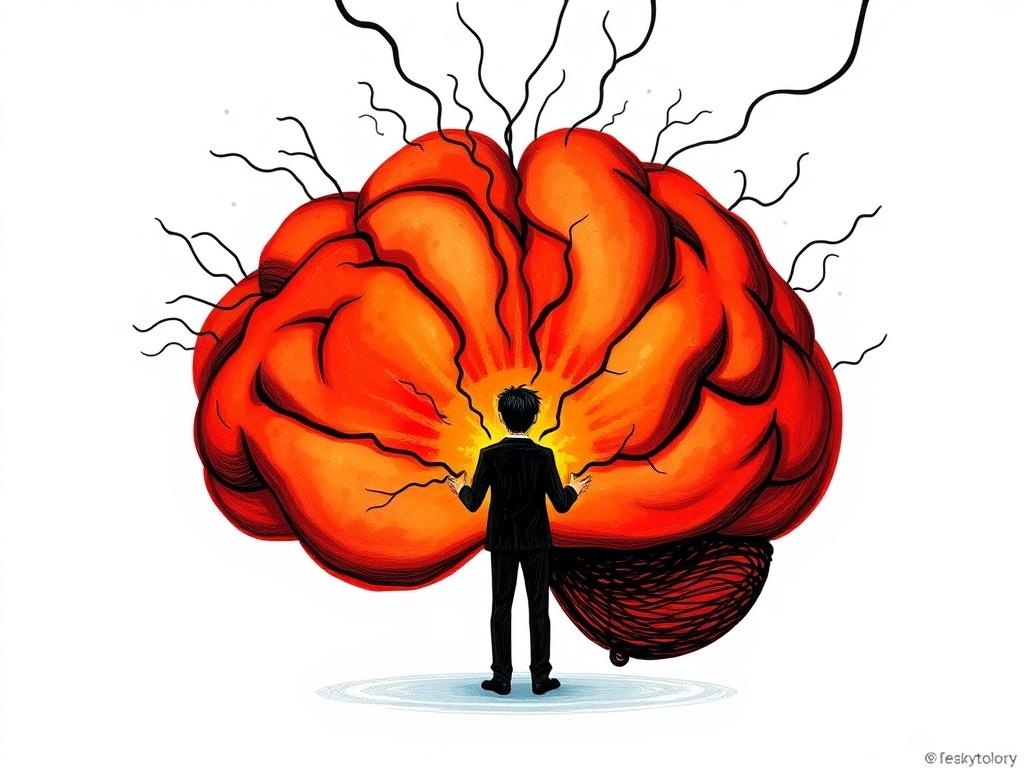
Culture shapes the meaning of failure. Societies that prize individual success and stigmatize mistakes heighten shame and secrecy, while cultures that accept risk-taking normalize setbacks as part of learning. Workplaces that publicly punish errors create environments where people hide problems, undermining innovation and collective learning.
Family messaging also leaves a lasting imprint. Children raised with conditional regard—love tied to achievements—learn to equate failure with loss of worth. Those raised with unconditional support learn that mistakes are part of being human, which fosters resilience and exploration.
Social networks can either amplify or mitigate the damage of a setback. Shame tends to isolate, but sharing vulnerabilities with trusted others often produces perspective, practical help, and emotional relief. Building relationships that tolerate imperfection is a preventive strategy against failure’s corrosive social effects.
Failure and learning: what research shows
Experimental studies on learning consistently show that errorful practice can be more effective than perfect practice—provided that the errors are corrected and understood. Making mistakes during the acquisition of a skill exposes gaps in knowledge and prompts more targeted practice, accelerating mastery in the long run.
However, not all errors produce learning. Random or unexamined mistakes—those without feedback or reflection—do little to improve performance and may simply erode confidence. The sweet spot is productive failure: errors that occur during a structured challenge and are followed by meaningful analysis and repair.
Longitudinal research also reveals that early setbacks predict growth when coupled with supportive contexts and sustained effort. Many high achievers report formative failures—failed experiments, rejected proposals, early bankruptcies—that forced them to redesign strategies, refine goals, and ultimately succeed in more sustainable ways.
Emotional regulation and resilience strategies
Resilience isn’t an innate reservoir you either have or lack; it’s a set of skills that can be developed. Emotion regulation—naming feelings, practicing mindful breathing, and reframing intrusive thoughts—reduces the intensity of distress and frees cognitive bandwidth to solve problems. Simple practices like pausing for ten deep breaths after a setback lower reactivity and allow clearer planning.
Behavioral strategies complement emotional work. Breaking recovery into small, doable steps prevents paralysis and gradually rebuilds confidence. For instance, after a failed presentation, the next step might simply be soliciting one specific piece of feedback, then rehearsing a single slide improvement.
Social strategies matter too. Naming the setback to a trustworthy person can diffuse shame and bring fresh ideas. Asking for help is itself an act of resilience; it reframes the narrative from solitary failure to collaborative problem-solving.
Practical exercises to reframe setbacks
Reframing is not about forced optimism; it’s an evidence-based process of changing context and interpretation. One useful exercise: write an objective account of the event, then list three plausible alternative explanations that reduce personal blame. This technique separates facts from self-judgment and often reveals a more balanced story.
Another exercise is the “What if I succeed?” visualization reversed to “What if this setback leads to X?” Imagine specific outcomes that could emerge from retrying with different tactics. That mental rehearsal opens perceived pathways and reduces the sense of dead-end failure.
Below is a small list of actionable practices to try after a setback:
- Pause for 10 deep breaths; delay major decisions for 24–48 hours.
- Write a factual account of what happened without adjectives or blame.
- Identify one small corrective action you can take within 72 hours.
- Ask for targeted feedback: one question, one timeframe.
- Record a single, measurable learning goal for the next attempt.
Leadership and organizational response to failure
Organizations set the tone for how failure is handled. Leaders who punish visible mistakes create cultures of silence where problems fester until they explode. Conversely, leaders who model vulnerability and analytical responses to setbacks invite experimentation and continuous improvement.
Psychological safety—the belief that one can speak up without punishment—is central to team learning. Teams that feel safe report more near-misses, surface more assumptions, and iterate faster. Creating rituals for debriefing mistakes, such as blameless postmortems, institutionalizes learning and diffuses personal blame.
At the structural level, organizations benefit from calibrated incentives. Rewarding only flawless outcomes encourages gaming and hiding of problems; rewarding thoughtful risk-taking and transparent post-failure analysis encourages innovation and sustained performance gains.
Psychological safety: the bedrock of learning
Psychological safety rests on predictable norms: people will not be publicly shamed for admitting ignorance or error. When these norms are present, members contribute ideas freely, challenge assumptions, and refine work collaboratively. The result is not chaos but a dynamic discipline of continuous improvement.
Leaders foster safety by acknowledging their own mistakes, inviting critique, and showing how errors are used as learning signals. Small behavioral signals—saying “I don’t know,” asking open-ended questions, and thanking people for reporting issues—build trust over time and shift the organizational response to failure.
Developmental perspectives: children and adolescents

How we speak to children about mistakes shapes their future relationship with challenge. Praising effort and strategies rather than fixed traits reduces fear of failure and promotes persistence. Conversely, praise tied only to outcomes creates performance pressure and an aversion to difficult tasks where failure is likely.
Adolescence is a sensitive period because identity formation intensifies reactions to social feedback. Peer evaluation can amplify shame; without supportive scaffolding, setbacks can lead to avoidance and disengagement. Parents and educators who normalize revision and model corrective action buffer young people from spiraling responses.
Practical steps for caregivers include labeling emotions as normal, modeling how to analyze errors, and celebrating learning steps rather than final outcomes. Teaching simple frameworks—like Plan-Do-Review—helps young learners translate setbacks into actionable cycles of improvement.
Creativity, innovation, and productive failure
In creative work, failure is often an indicator of exploration. Many breakthroughs arise only after a string of prototypes that didn’t work. The crucial variable is not how many times you fail but whether each attempt yields insight that narrows the search to viable solutions.
Creative teams succeed when they cultivate curiosity, tolerate ambiguity, and log their experiments comprehensively. A culture that confuses failure with incompetence stifles the very failures that generate novelty. Productive failure requires both freedom to try and discipline to learn.
Inventors and artists often speak of “failing forward”—the idea that each setback provides a directional clue. Documenting those clues systematically turns what looks like a chaotic trail of mistakes into a coherent map toward innovation.
Personal experience: a failed project that taught me to rebuild
Years ago I led a small venture that collapsed within a year. The product was earnest and technically competent, but I had misread customer priorities and failed to build the right partnerships. The initial emotional reaction was a mixture of shame and disbelief; privately, I worried I had wasted time and let down colleagues.
What followed was a slow recovery built on structure. I wrote a postmortem, separating facts from feelings, and outlined three concrete lessons: validate assumptions earlier, build smaller tests, and diversify feedback sources. Sharing the postmortem with the team turned a private failure into collective learning and maintained relationships that later proved invaluable.
The incident reshaped my approach to risk. I became more deliberate about framing failures as experiments and more disciplined about logging what had been learned. That approach didn’t eliminate pain, but it converted it into usable knowledge and preserved a willingness to try again.
When failure signals a need for change
Not all setbacks are harmless learning opportunities. Repeated failures with the same pattern often indicate a deeper mismatch: incompatible goals, unrealistic assumptions, or a toxic environment. Distinguishing between normal bumps and structural problems is a critical judgment call.
Use pattern detection: if you see the same failure arise across different contexts, ask whether underlying systems, values, or strategies need reworking. Sometimes the adaptive response is to pivot—to change the goal, the team, or the approach—rather than persevere at all costs.
Decision rules help: set preplanned review points, gather disconfirming evidence deliberately, and consult trusted outsiders who can offer less emotionally entangled perspectives. These safeguards reduce sunk-cost bias and enable timely course corrections.
How to talk about failure: language that helps
The words we use shape responses. Saying “I failed” is heavy and global; preferring language like “this attempt didn’t work” or “that strategy missed the mark” localizes the problem and opens the door to iteration. Language that describes process rather than identity encourages action and learning.
In teams, adopt shared vocabulary for mistake analysis: “What happened?” “What did we expect?” “What did we learn?” These neutral prompts steer conversations away from blame and toward system-level insights. Over time, this linguistic habit builds a culture where failure is assessed and assimilated rather than buried.
Be careful with euphemisms that obscure responsibility, such as “lessons learned” without follow-through. The goal is precise, accountable language that surfaces causality and assigns next steps for repair and prevention.
Practical checklist for recovering from a setback
Below is a compact, actionable checklist to use immediately after a setback. Each item is meant to restore clarity and momentum rather than to eliminate discomfort, which is a normal and inevitable part of the process.
- Pause: allow 24–72 hours before major decisions when emotions are high.
- Record facts: write what happened in neutral terms for later review.
- Separate feelings from analysis: name emotions and let them be.
- Identify one learning and one corrective action you can take within a week.
- Share the account with a trusted person and solicit one piece of feedback.
- Plan a small experiment to test a revised approach and schedule a follow-up.
Common pitfalls that prolong the pain
Several behaviors turn recoverable setbacks into prolonged crises. Rumination—replaying the event repeatedly—keeps the nervous system activated and prevents problem-solving. Avoidance—doing nothing in the hope the issue will fade—prevents corrective learning. Both are natural but counterproductive responses.
Perfectionism is another trap. When the fear of future failure becomes paramount, people either over-prepare indefinitely or refuse to try. Accepting that competence develops through imperfect practice is essential to escaping perfectionist paralysis.
Finally, conflating identity with performance is especially harmful. If a professional failure becomes an identity verdict, decisions become defensive. Counteract this by cultivating multiple sources of self-worth—relationships, hobbies, and values—that keep a single setback in perspective.
Failure across life domains: relationships, career, health
Failure manifests differently depending on the domain. In relationships, it may show as a breach of trust or unmet expectations; recovery usually requires sincere repair behavior and calibrated apologies. In careers, failure often comes through missed promotions or business setbacks; recovery depends on learning, networking, and sometimes a strategic pivot.
Health-related failures—relapse in addiction recovery or lapses in a diet—carry moralized judgments that increase shame. Effective responses here emphasize harm reduction, relapse prevention planning, and compassion rather than moral condemnation. Each domain demands tailored responses but shares common psychological principles: clarity, repair, and iteration.
Seeing patterns across domains can be revealing. If you notice similar avoidance or explanatory habits across relationship and career setbacks, that points to a psychological habit worth addressing, such as fear of vulnerability or excessive self-criticism.
Building a personal culture that tolerates failure
Creating a personal culture that uses setbacks productively takes intentional practices. Develop rituals for postmortem reviews, keep a “learning log” where you record experiments and outcomes, and set explicit norms for feedback in your close teams and partnerships. Rituals reduce ambiguity and make learning habitual.
Another useful habit is to curate stories of respected people who failed before succeeding. Those stories normalize the process and provide models of perseverance and adaptation. However, avoid hero-worship narratives that romanticize suffering; the goal is realism—recognizing both the cost and the benefit of setbacks.
Finally, cultivate small, frequent challenges that are safely risky. Micro-experiments build tolerance for discomfort and provide continuous evidence that you can recover, adjust, and improve. Over time, this incremental exposure reduces the fear response and makes larger risks manageable.
Ethical considerations: when failure harms others
Some failures have broader consequences—financial collapses, medical errors, safety lapses. Ethical responsibility increases with impact. In high-stakes domains, accountability, transparent correction, and restitution are not optional; they are moral imperatives that rebuild trust and prevent harm from recurring.
Organizations and individuals in positions of power must balance learning with responsibility. Blaming systems without accepting personal accountability undermines trust, but scapegoating individuals for systemic problems is also unjust. Ethical responses involve acknowledging harm, identifying root causes, and implementing specific safeguards.
Failure in public roles also requires thoughtful communication. Honest, timely explanations and clear plans for change reduce speculation and help affected parties regain confidence. Silence or obfuscation prolongs damage and erodes legitimacy.
Final reflections on setbacks as a human constant
Failure is not an occasional visitor but a constant companion in any meaningful life. The psychological task is not to eliminate it but to shape the way we meet it: with curiosity, structure, and compassion. That shift transforms setbacks from identity threats into information-rich moments that guide refinement and growth.
Learning to recover well means practicing both emotional care and disciplined analysis. It means building social networks that tolerate imperfection and organizations that learn instead of punish. Most of all, it means cultivating a personal narrative in which mistakes are chapters, not the entire story.
When you next face a stumble, give yourself the small kindness of a measured response: name what happened, breathe, learn one thing, and try again. Over time, those modest moves accumulate into a more resilient, wiser approach to life’s inevitable losses and unexpected opportunities.