
Success rarely arrives as a single triumphant moment; it is the product of countless small decisions, habits, and ways of thinking. Across careers, disciplines, and cultures, patterns of thought and behavior recur—patterns that can be learned and refined. This article examines those patterns, not as platitudes, but as practical psychological tools you can use to redesign how you pursue goals.
What success really means
Before changing your thinking, define what success means to you. For some, success is public recognition or financial security; for others, it’s mastering a craft, nurturing relationships, or sustaining well-being. Clarity about the end state gives your psychology a target to aim at instead of leaving you to chase vague approval.
Because meaning matters, goals that line up with your values are more likely to survive friction and setback. When work feels aligned with a deeper purpose, motivation shifts from fragile bursts to a steadier, more sustainable force. That alignment is a psychological anchor on days when external rewards shrink or disappear.
Core psychological principles
Mindset: growth vs. fixed
The way you interpret ability and challenge shapes the entire learning process. People with a growth mindset view ability as expandable; they see obstacles as information and failure as a path to improvement. This orientation encourages experimentation and lowers the psychological cost of risk.
By contrast, a fixed mindset treats talent as static and mistakes as proof of limitation. That perspective narrows learning and fosters avoidance. You can move toward growth thinking by deliberately reframing setbacks as evidence of where to apply effort rather than as judgments on identity.
Self-efficacy and agency
Self-efficacy—your belief in your capacity to influence outcomes—turns intentions into action. High self-efficacy doesn’t guarantee success, but it makes persistence far more likely when difficulties arise. It’s less about overconfidence and more about calibrated faith in your ability to learn, adapt, and execute.
Building self-efficacy is practical: set reachable subgoals, track small wins, and seek feedback that highlights specific strategies rather than broad personal traits. Each verified accomplishment raises the psychological bar for what you believe you can do next.
Identity and narrative
The stories you tell about yourself guide what you attempt and how you respond to outcomes. If you see yourself as “not a morning person” or “bad at math,” those narratives become self-fulfilling prophecies. Conversely, adopting identity-based goals—“I am someone who writes daily”—changes the baseline for action and makes consistency easier.
Change your narrative incrementally. Start with identity statements grounded in evidence—short, believable, and specific—then expand them as new behaviors accumulate. Over time, your actions and your self-story converge, producing durable change.
Motivation and goals

Intrinsic versus extrinsic motivation
Motivation falls on a spectrum from deeply intrinsic—driven by internal satisfaction—to strongly extrinsic—driven by external rewards or pressures. Intrinsic motivation tends to sustain long-term engagement because the activity itself is rewarding. Extrinsic motivators can jump-start behavior but often need careful structuring to avoid crowding out intrinsic interest.
To harness both, anchor tasks in personal meaning while using external rewards strategically during habit formation. Over time, aim to let intrinsic enjoyment—competence, autonomy, and purpose—carry more weight.
Setting better goals
Effective goals are specific enough to guide behavior but flexible enough to adapt. Binary targets—finish a book, launch a project—create clarity. Process goals—write 500 words a day, make five outreach calls—create repeatable routines. Combine both types to preserve direction without surrendering momentum when conditions shift.
Time horizons matter. Long-range visions give context, while near-term checkpoints create frequent feedback. Calibrating both prevents the common psychological trap of either aimless activity or paralysis by too-large objectives.
Rewards, costs, and temporal discounting
Humans often prefer smaller immediate rewards over larger delayed ones, a bias called temporal discounting. That tendency sabotages long-term goals even when we know better intellectually. Designing immediate, tangible rewards—celebrations for hitting a subgoal, short breaks, or visual progress trackers—reduces the pull of present bias.
Equally important is understanding psychological costs: if a goal systematically demands high cognitive or emotional expenditure without visible return, motivation will fade. Rebalance by lowering friction, delegating tasks, or restructuring the goal into smaller steps.
Habits, routines, and deliberate practice
Habits condense repeated decisions into near-automatic responses, freeing mental energy for higher-order thinking. When habits align with your goals, they produce progress even on low-energy days. The trick is in choosing keystone routines that ripple outward and simplify complex paths to achievement.
Deliberate practice differs from mere repetition. It targets specific weaknesses, provides immediate feedback, and gradually pushes ability just beyond current limits. Blocked and repeated-by-design practice outperforms sporadic effort that lacks focused improvement criteria.
Building habits that stick
Start with environment design: make desired actions easy and undesirable ones harder. If you want to read more, place a book next to your bed and remove distracting devices. Small changes in cues and context often have outsized effects on behavior.
Pair habits with anchors—existing routines that trigger new behaviors. Habit stacking (after I brush my teeth, I will review my plan for ten minutes) ties new actions to well-established ones, increasing the chance of repetition until the habit consolidates.
- Make the cue obvious, the routine simple, and the reward immediate.
- Design for the long habit horizon—consistency matters more than intensity at first.
- Track progress visibly; streaks and checkmarks are psychologically powerful.
Resilience, stress, and failure
Resilience is not an absence of pain but an ability to engage with difficulty productively. People who sustain achievement are adept at tolerating discomfort long enough to extract useful learning. That requires psychological tools: emotional regulation, supportive routines, and realistic optimism about recovery timelines.
Stress, in moderate doses, can sharpen focus; in chronic doses, it blunts learning and motivation. Interventions—sleep, exercise, brief mindfulness practices, and social connection—reduce the physiological load so cognitive resources are available for problem solving. The choice to protect these basics is often more strategic than an extra hour of work.
Reframing failure
Reframing turns failure from a verdict into data. Ask specific questions after a setback: What assumptions did I rely on? Which strategies produced value? What information is missing? That analytical stance converts emotional reactions into actionable steps.
Sharing failures selectively also accelerates learning. When teams normalize constructive postmortems, they unlock rapid adaptation. At the individual level, telling a trusted colleague about a mistake helps reframe it and reduces the isolation that magnifies negative narratives.
Cognitive biases and decision-making
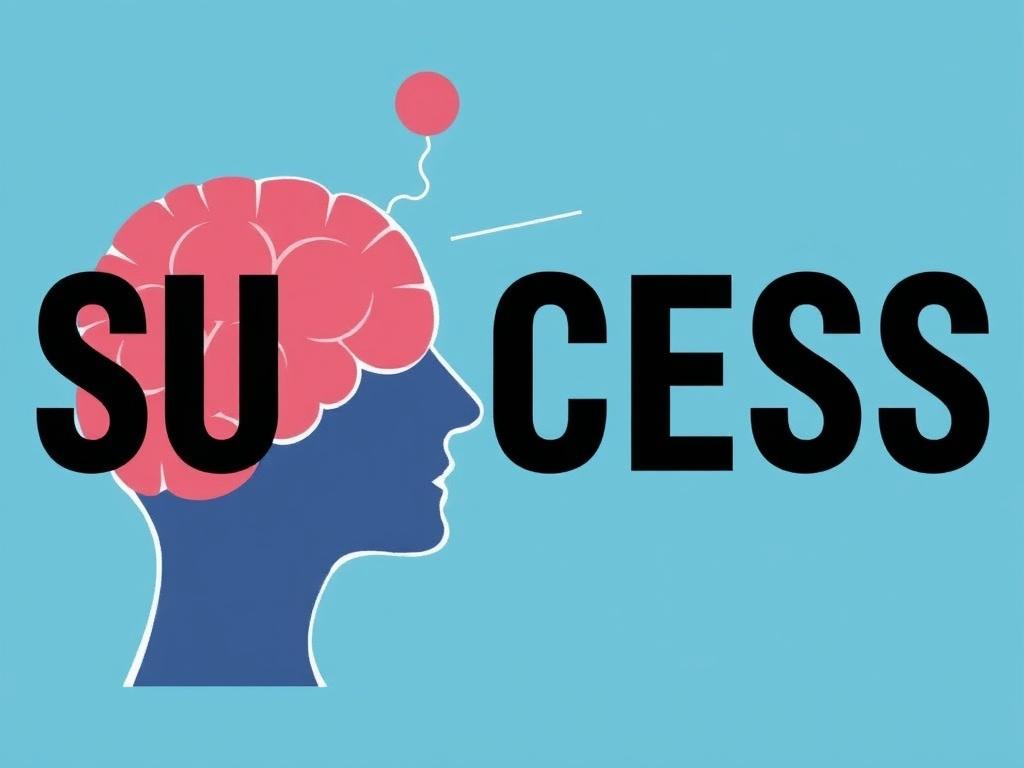
Cognitive shortcuts help us navigate complexity but also introduce predictable errors. Awareness of these biases—confirmation bias, loss aversion, and the planning fallacy—creates space to counteract them. The simplest correction is to treat decisions as experiments rather than statements of character.
For example, the planning fallacy leads us to underestimate time and resources. Counter this by referencing past projects rather than relying solely on optimistic forecasts. That small shift nudges projections toward realism without killing ambition.
Framing choices and trade-offs
Decision quality often depends on how options are framed. Reframe choices to reveal trade-offs clearly: instead of deciding whether to say yes to a project, frame it as choosing which existing commitment to reduce. That forces alignment with priorities and reduces decision fatigue.
Use precommitment strategies—calendaring, public pledges, or financial stakes—to lock in valuable choices when motivation is high. Precommitments convert future inertia into present action and reduce the mental burden of repeated willpower decisions.
Social context: relationships, networks, and mentors
Success rarely happens in isolation. Networks provide resources, social proof, and technical assistance that accelerate progress. Deliberate networking—cultivating relationships that align with your goals—beats scattershot contact building for sheer effectiveness.
Mentors compress learning by sharing shortcuts and clarifying trade-offs from their own experience. A mentor’s role is not to solve problems for you but to help you see patterns and test assumptions more quickly than you would alone.
- Seek mentors who have achieved what you want, and ask for targeted coaching rather than vague endorsement.
- Reciprocate: offer help based on what you can uniquely provide, even when that help is small.
- Maintain a diversity of contacts—across industries and perspectives—to reduce echo chambers.
Coordination and accountability
Social accountability raises the cost of drifting away from goals. Telling a friend about a target or joining a study group creates external expectations that, if chosen wisely, align with your intrinsic motives. It’s a psychological tilt toward follow-through.
Choose accountability partners who challenge gently and expect milestones. Avoid partners who only cheer or who shame; both extremes undermine steady progress by either reducing informational clarity or raising emotional costs of trying.
Feedback and learning loops
Timely, specific feedback is the engine of improvement. It tells you whether a technique is working and what to adjust next. The most useful feedback focuses on actions and strategies rather than on personal traits.
Design rapid feedback loops into your projects. If you’re learning a language, create short tests that expose weak areas. If you’re building a product, ship a minimal version and observe real users. Quick data beats polished conjecture every time.
| Feedback type | Best for | Example |
|---|---|---|
| Informational | Technique improvement | Coach corrects tennis swing |
| Outcome | Strategy validation | Sales conversion rates |
| Social | Motivation and norms | Peer review sessions |
Designing your success system
Success is engineered more often than it is stumbled upon. Building a personal system means aligning goals, routines, environment, and social supports so that effort compounds rather than dissipates. Systems reduce the need for heroic willpower and increase predictability.
Start by mapping friction points—times and tasks that repeatedly derail you. Tackle them first with small structural changes: batch tasks, block distracting sites, or automate repetitive decisions. Those fixes create the psychological bandwidth required for higher-leverage work.
Elements of an effective system
Integrate clear metrics, repeatable rituals, and scheduled recovery. Metrics tell you where you stand; rituals reduce start-up friction; recovery preserves the capacity to keep going. Each element supports the others and makes success more of a steady climb than a series of peaks and valleys.
Revisit the system every quarter. Progress and circumstances change, and the best systems evolve. Regular reviews let you prune ineffective practices and amplify what works without requiring a complete overhaul each time.
Real-life examples and author experience
Early in my career I chased productivity tricks without a clear north star, and I burned out twice in five years. The turning point came when I defined a compact set of priorities and designed daily rituals around them—morning writing, midday learning blocks, and an evening wind-down. The rituals stripped away decision noise and produced more consistent creative output.
One client I worked with wanted to double revenue but kept adding more services. We reframed the problem: instead of adding offerings, we clarified the most profitable customer and designed a targeted outreach sequence. With narrow focus and weekly feedback, revenue doubled in nine months without longer hours. The psychology was simple: constraints amplified leverage.
Another case was a young athlete who plateaued despite training harder. By shifting from volume-centered training to deliberate practice—short, focused sessions on weak technical elements and immediate coaching—the athlete regained traction. The shift reduced injury risk and increased measurable improvement in competition.
Common traps and how to avoid them
One common trap is overoptimizing tiny details while neglecting big structural issues. Tweaking email templates won’t help if you lack a coherent strategy for customer acquisition. Prioritize leverage points where small changes produce large effects.
Another trap is mistaking activity for progress. Busyness can feel productive without moving the needle. Use outcome-focused metrics and weekly reviews to ensure actions align with results rather than with the comforting sensation of being busy.
- Avoid perfection paralysis; ship imperfect work to gather real data.
- Resist the myth of pure inspiration; structure opens the door for creativity to enter regularly.
- Watch for social comparisons that skew your timeline; other people’s visible success is often the result of private, unseen groundwork.
Putting it into practice: an actionable 12-week plan
Change is easiest when broken into manageable cycles. A 12-week plan balances ambition and realism, creating enough time for habits to form and feedback to accumulate. Below is a compact, week-by-week approach you can adapt to any goal domain.
- Week 1: Clarify one primary objective and identify three supporting process goals.
- Week 2: Conduct an audit of current routines and remove two sources of friction.
- Week 3: Design core daily rituals (start, focus, finish) and schedule them into your calendar.
- Week 4: Begin deliberate practice with short, measurable sessions and collect baseline feedback.
- Week 5: Introduce an accountability partner or join a peer group for weekly check-ins.
- Week 6: Review progress, adjust metrics, and celebrate small milestones.
- Week 7: Expand feedback channels—user testing, coach review, or data dashboards.
- Week 8: Tackle an identified bottleneck with a focused, time-limited experiment.
- Week 9: Reassess energy management—sleep, movement, nutrition—and make two protective changes.
- Week 10: Scale a successful tactic and reduce or eliminate what didn’t work.
- Week 11: Prepare a minimal viable presentation of results to solicit targeted critique.
- Week 12: Synthesize lessons, update your system, and set the next 12-week objectives.
This plan works because it alternates action with reflection. The rhythm keeps you moving while also forcing frequent course corrections based on evidence rather than hope.
Measuring what matters
Metrics can mislead when they measure vanity rather than value. Choose metrics that reflect progress toward your primary objective, and pair them with leading indicators that predict future success. For instance, instead of focusing solely on revenue, track customer acquisition cost and retention rate as leading signals.
Balance quantitative measures with qualitative signals—satisfaction, sense of purpose, and creative momentum. Those softer signals often determine whether progress is sustainable and meaningful beyond external markers.
| Metric type | Example | Why it matters |
|---|---|---|
| Outcome | Revenue | Shows ultimate result but lags behind action |
| Leading | Weekly active users | Predicts future outcomes and allows quick correction |
| Qualitative | Customer feedback themes | Reveals hidden problems and opportunities |
Adapting over the long run
Psychological strategies that work at one life stage may need revision later. What helped you build a business in your twenties might not sustain family life in your thirties. Periodic recalibration ensures that your definition of success—and your methods for reaching it—remain relevant and humane.
Think of your approach as modular: retain the structural elements that produce resilience and discard the rituals that no longer serve. The ability to iterate on your system continuously is itself a critical predictor of long-term achievement.
A final word on focus and freedom

Success is as much about what you decide not to pursue as about what you chase. Constraints create clarity, and clarity increases the probability of meaningful achievement. Selectivity is a psychological skill that protects your attention, energy, and joy.
At the same time, guard freedom—the ability to experiment, to lose for a season, and to change direction. Rigid attachment to a single outcome can blind you to better paths. The best long-term achievers balance disciplined focus with options that allow them to pivot when new evidence suggests a better route forward.
Change your thinking, not by adopting another productivity hack, but by reshaping the mental architecture around your goals: clear values, small wins, feedback-rich practice, supportive social systems, and realistic self-narratives. Over months and years, those decisions accumulate into distinct outcomes. Begin with one small system change this week, and let the psychology of your habits do the rest.