Morality often feels like a tangle of rules, emotions, and cultural habits we pick up without noticing. Behind that everyday sense of right and wrong lies a rich field of study that traces how people develop moral judgments, why those judgments shift over time, and how social forces shape what we call ethical behavior.
That blend of psychology, philosophy, neuroscience, and sociology gives the topic its energy and complexity. I’ll guide you through the major theories, the evidence behind them, and what the findings mean for parents, teachers, lawmakers, and anyone curious about why people behave the way they do.
A brief history of the field
The modern scientific study of moral development began in the early twentieth century with observational work and careful questioning of children. Psychologists sought to map not only what people believe but the cognitive and social processes that produce moral convictions at different ages.
Jean Piaget offered one of the first systematic accounts by watching children play and arguing that moral understanding evolves from rigid rule-following toward flexible cooperation. Lawrence Kohlberg expanded on Piaget’s ideas with a stage model grounded in moral dilemmas, proposing that reasoning quality improves through identifiable levels.
In the late twentieth century Carol Gilligan and others challenged the field to broaden its lens, pointing out gendered assumptions and emphasizing care, relationships, and context alongside justice-oriented reasoning. These historical debates pushed researchers to consider multiple pathways to moral maturity rather than a single ladder.
Stage models: patterns and puzzles
Stage theories propose that people move through qualitatively different ways of thinking about moral problems, and they remain influential because they give shape to otherwise messy observations. Kohlberg’s three levels—preconventional, conventional, and postconventional—are probably the best-known instantiation of this idea.
Yet stages are not the whole story. People can reason at a high level in one domain and at a lower level in another, and cultural variation suggests that the end points Kohlberg emphasized are not universal endpoints for everyone. Still, stage models remain useful as organizational tools for understanding developmental trends.
| Theorist | Core idea | Typical focus |
|---|---|---|
| Jean Piaget | Moral understanding shifts from obedience to mutual respect | Early childhood through adolescence; rule origin and intention |
| Lawrence Kohlberg | Sequential stages of moral reasoning from obedience to principled ethics | Moral dilemmas and justifications across the lifespan |
| Carol Gilligan | Emphasis on care and relationships as moral voices | Gender, voice, and context in ethical thinking |
Mechanisms: empathy, reasoning, and social learning
Moral development rests on multiple mechanisms that interact. Empathy and perspective-taking allow us to feel or imagine another’s situation, while abstract reasoning lets us weigh principles and consequences. Social learning supplies the templates—what adults and peers model and reward.
These mechanisms often operate together. A child may feel discomfort when they see a peer hurt (empathy), recall a parental rule that people should be kind (social learning), and then explain their action by citing fairness (reasoning). The balance among these drivers shifts with age and context.
Behavioral studies show that modeling and reinforcement strongly influence early moral behavior, while cognitive skills like counterfactual thinking and executive control become more influential in adolescence and adulthood. Put differently, experiencing and thinking both matter—and they reinforce each other.
Emotions and the brain
Once treated as separate from reasoning, emotions are now recognized as integral to moral judgment. Feelings such as guilt, compassion, outrage, and disgust shape what we notice, what we care to justify, and what we ultimately do. Emotional reactions often arrive quickly and strongly, steering subsequent reflection.
Neuroscience pinpoints several regions involved in moral processing: the ventromedial prefrontal cortex (vmPFC) supports value integration and emotional aspects of decision-making, the temporoparietal junction (TPJ) contributes to perspective-taking, and the amygdala is implicated in emotional salience and fear responses. Together these systems underwrite both intuition and deliberation.
Dual-process models capture this interplay by describing fast, intuitive reactions alongside slower, controlled reasoning. Research shows that disrupting emotional circuitry can alter moral choices in predictable ways, which underlines the idea that emotions are not obstacles to morality but its scaffolding.
Culture, context, and moral diversity
Cultures shape what counts as moral, how conflicts are resolved, and which virtues are prized. For example, individualist societies often emphasize rights and autonomy, whereas collectivist cultures emphasize duties, harmony, and relational obligations. Neither perspective is inherently superior; they simply organize moral attention differently.
Cross-cultural studies reveal striking differences in moral priorities, such as the weight given to loyalty, purity, authority, fairness, and care. These variations matter when psychologists interpret responses to dilemmas; what looks like «lower» reasoning in one frame may reflect a different set of moral concerns entirely.
Context also matters within cultures: stress, economic scarcity, and perceived threat can shift moral priorities toward self-protection and ingroup loyalty. Understanding moral development therefore requires attention to ecology—daily pressures as well as cultural narratives.
Family, schools, and institutions shaping morality
95276aa6b62c1613e105d0424cbb787d.jpg
Families provide the first moral ecology. Parenting styles—especially those that combine warmth with clear expectations—tend to foster internalized moral standards. Conversations about reasons for rules, rather than mere punishment, encourage children to adopt principles rather than mere compliance.
Schools extend that work through curricula, social opportunities, and institutional norms. Effective programs teach perspective-taking, conflict resolution, and moral reasoning while giving students chances to practice prosocial behavior. Civic rituals and classroom rules both socialize children into shared expectations.
Institutions—religious communities, sports teams, workplaces—create moral cultures with their own codes and reinforcements. When institutional values are consistent with broader social norms, moral development is smoother; when they clash, people experience moral tension that can spur reflection or division.
- Model clear, consistent behavior rather than relying on punishment alone.
- Encourage explanation and discussion of moral reasons, not just rule rehearsal.
- Create opportunities for active participation and service to reinforce internal motivation.
Development across the lifespan

In early childhood, moral learning is concrete and heavily influenced by immediate consequences and adult guidance. Young children distinguish right from wrong but often focus on outcomes rather than intentions; a broken cup is bad because it’s broken, even if it was an accident.
During middle childhood and adolescence, cognitive advances in abstract thought and perspective-taking permit more sophisticated arguments about fairness, rights, and motives. Peers and identity exploration add pressure and opportunity: adolescents often test moral boundaries as they work out who they want to be.
Adulthood brings further complexity as responsibilities and roles multiply. Moral priorities can stabilize but also shift with new experiences—parenthood, career challenges, and civic engagement can deepen moral commitments or, alternatively, introduce compromises. Moral reasoning does not stop developing; it continues adapting to life’s demands.
In later life some people show increases in certain moral strengths—greater compassion, reduced reactivity, and a broader sense of perspective—while others may experience declines in cognitive flexibility. The picture is heterogeneous, reflecting variation in health, social networks, and life history.
Measuring moral development
Researchers use multiple methods to study moral growth: structured interviews that probe reasoning, standardized dilemmas like Kohlberg’s Heinz case, behavioral observations, self-report questionnaires, and neuroscientific measures. Each method captures different facets of morality, and together they form a convergent picture.
Behavioral measures—observing sharing, helping, or cheating—offer ecological validity but can be influenced by immediate incentives. Interviews and vignette-based approaches reveal reasoning but may overstate how people will act in real life. Neuroscience adds a layer of process evidence without solving the normative questions.
| Method | Strength | Limitation |
|---|---|---|
| Behavioral observation | Real actions, high ecological validity | Context-dependent; may reflect situational pressures |
| Structured interviews | Rich insights into reasoning and justifications | Relies on verbal skill and introspection |
| Neuroimaging | Reveals underlying systems and timing | Expensive and interpretively complex |
Applications and real-world implications
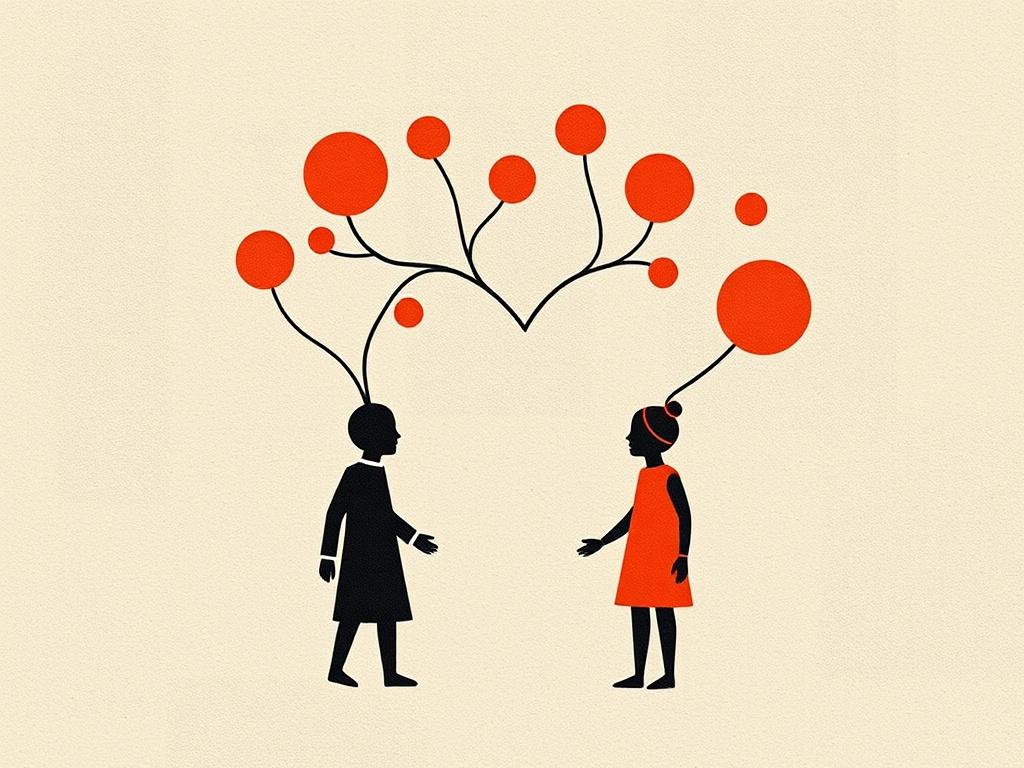
Insights from moral development research inform education, parenting, public policy, and the justice system. When interventions align with developmental capacities—teaching empathy to young children, fostering deliberation with adolescents—they are more likely to succeed.
Organizations and institutions can also apply developmental principles. For example, restorative justice programs draw on relational repair and perspective-taking rather than punitive isolation, aiming to change behavior by rebuilding social ties and responsibility.
- Schools: integrate moral reflection with civic action and service learning.
- Workplaces: create codes that combine accountability with opportunities for moral deliberation.
- Justice systems: explore restorative practices that emphasize repair and reintegration.
Contemporary debates and future directions
Current debates probe the balance between universal moral capacities and cultural specificity. Some researchers argue for core moral foundations shared across humanity, while others emphasize cultural shaping to the point where different values are not commensurable without translation.
Methodological advances push the field toward richer, multi-method studies that combine longitudinal designs, behavioral experiments, and neuroscience. These designs help reveal trajectories and causal mechanisms rather than just cross-sectional snapshots.
Ethical philosophy and psychology are also converging, challenging scholars to be explicit about normative commitments when interpreting developmental data. The future likely holds more dialogue across disciplines and more attention to how institutions can cultivate moral maturity at scale.
A practitioner’s notebook: lessons from my work
In my years teaching middle school, I learned that moral growth often takes place in ordinary moments: a heated classroom debate, a student offering to cover for a friend who cheated, a peer confronting name-calling. Those scenes revealed more about moral life than many formal assessments.
One memorable intervention was a weekly circle where students discussed neighborhood dilemmas and practiced saying why they took a position. Over months I watched students shift from rule recitation to more nuanced reasoning, and they reported greater willingness to stand up for classmates.
These practical experiences taught me that moral education thrives on practice, not just instruction. Role-play, reflective writing, and structured opportunities for responsibility—even small classroom jobs—help turn abstract values into lived habits.
Evolving moral senses: what this means for us
Understanding how moral minds develop changes how we respond to conflict, punishment, and civic education. It encourages patience with ongoing growth, realism about situational influences, and a commitment to shaping environments that support moral reflection and empathic practice.
Morality is neither fixed nor purely subjective; it is a dynamic pattern that emerges from biology, thought, emotion, and culture. By paying attention to the processes that scaffold moral thinking and behavior, we can design homes, schools, and institutions that help people become more responsible, compassionate participants in public life.