
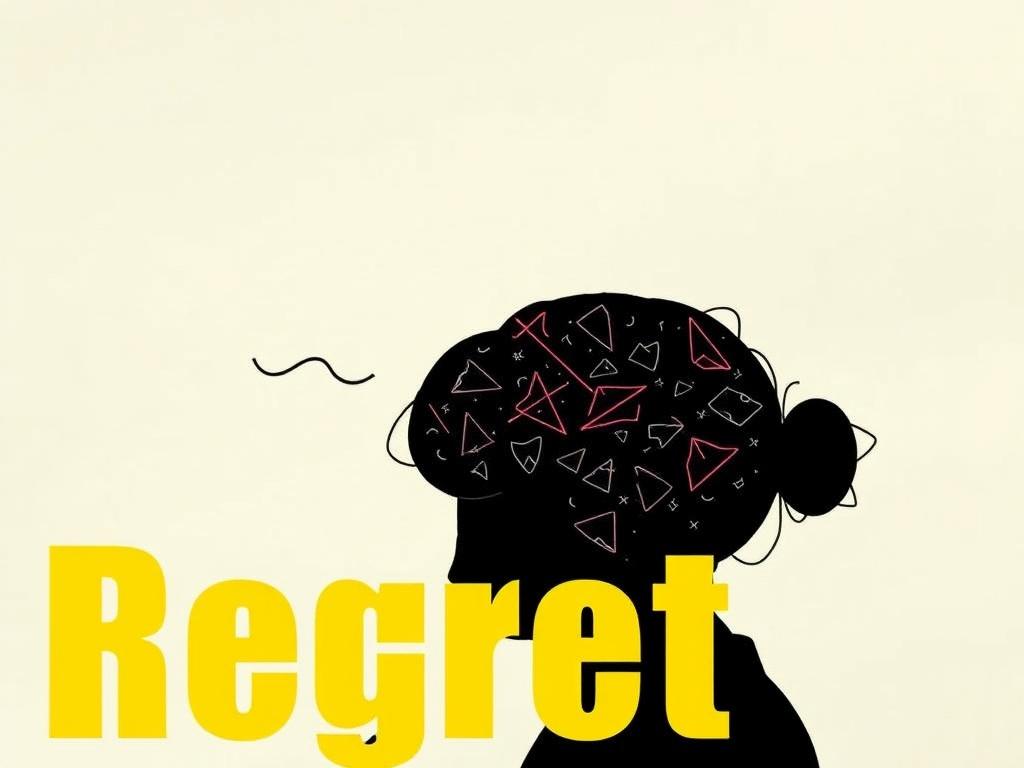
Regret is one of those emotions that arrives quietly and then fills the room, rearranging furniture and making us take stock of what’s missing. It is not simply sorrow or disappointment; regret carries a counterfactual voice that says, «If only I had done this differently.» That voice can be a teacher, an accuser, or both, and understanding how it operates gives us tools to learn without being consumed.
What is regret and how it differs from related emotions
At its core, regret is the painful awareness that a past choice led to a worse outcome than an alternative would have. This contrasts with simple sadness, which can arise from loss without comparison, and guilt, which centers on perceived moral failure rather than on what might have been. Anger and shame can accompany regret, but they do different work: anger often points outward, shame folds inward, and regret keeps reworking a decision in the mind.
Psychologists emphasize counterfactual thinking—imagining alternative scenarios—as the hallmark of regret. When we imagine how events could have unfolded better, regret arises; when we accept that things could not have been otherwise, the feeling is less likely to take hold. This cognitive flavor makes regret both richly informative and potentially corrosive, because we can replay «what if» scenarios endlessly without new evidence.
Regret also differs from remorse and repentance in its behavioral implications. Remorse often motivates reparative action aimed at others, whereas regret is primarily about the self and the self’s trajectory. You can regret a missed career opportunity without having anyone else to apologize to; that inward orientation shapes the ways we cope and the strategies that actually reduce future regret.
Why regret exists: the evolutionary and cognitive roots
From an evolutionary standpoint, regret appears to be an adaptive signal. It highlights choices that reduced fitness or social standing and nudges us toward different behavior next time. The capacity to simulate alternatives—what cognitive scientists call mental time travel—has obvious survival benefits: anticipating outcomes and avoiding past mistakes help organisms navigate complex environments more successfully.
Cognitively, regret is constructed from several mental operations: memory retrieval, causal attribution, outcome comparison, and affective forecasting. Our brains retrieve salient episodes, attribute outcomes to our decisions, compare actual and imagined results, and tag those comparisons with emotion. This circuitry evolved for efficient learning, but because it relies on imperfect memory and biased imagination, it can mislead as often as it instructs.
One key cognitive quirk that amplifies regret is hindsight bias—the tendency to see past events as having been more predictable than they really were. Hindsight makes our errors feel like personal failures rather than probabilistic outcomes, intensifying regret and sometimes causing us to punish ourselves unfairly. Recognizing the role of hindsight softens the judgment and restores a measure of perspective.
Types of regret: action versus inaction, transient versus chronic
Researchers commonly distinguish between regrets of action—things we did that we wish we hadn’t—and regrets of inaction—opportunities we failed to seize. Short-term studies show that people often regret actions more immediately because active decisions can produce glaring, immediate consequences. Over time, however, inaction tends to produce deeper regrets because missed opportunities accumulate and we imagine prolonged lost possibilities.
Another useful distinction is between transient regret, which flares and fades, and chronic regret, which becomes woven into identity and life narrative. Transient regret typically prompts quick corrective moves or lessons that dissipate; chronic regret persists, influencing future choices and mood, and is often entangled with unresolved relationships or unfulfilled values. The distinction matters because interventions that help with fleeting regret—like reframing—may not suffice for chronic, identity-level remorse.
These types interact with personality and context. Risk-takers and impulsive people may accumulate action regrets, while cautious or avoidant people more often carry inaction regrets. Social factors—such as lost relationships or career setbacks—also sway which form of regret dominates, and cultural norms influence whether people are more likely to act or to refrain in the first place.
Counterfactual thinking: the engine behind regret
Counterfactual thoughts are the «if only» scenarios that give regret its texture. These mental simulations can be upward—imagining a better outcome—or downward—imagining a worse one that makes the current situation look better. Upward counterfactuals typically produce regret and motivate corrective action, while downward counterfactuals can generate gratitude and relief.
Counterfactuals come in two flavors: additive, where we imagine adding a step that would have produced a better outcome, and substitutive, where we imagine exchanging one action for another. Additive counterfactuals often feel more plausible and thus more painful, because they suggest small changes could have made a big difference. Substitutive counterfactuals can lead to larger strategic shifts in future decisions.
Left unchecked, counterfactual thinking turns into rumination, a loop of repetitive thoughts that seldom leads to new insight. Productive counterfactuals are specific, actionable, and finite: they pinpoint what could be changed and allow a plan to emerge. The trick is to harvest the information in the counterfactual without tethering your mood to an endless «if only» reel.
Anticipatory regret and decision making
Anticipatory regret—worrying about how you will feel about a choice in the future—plays a powerful role in decision making. It can protect us from rash choices, nudging toward caution, but it can also stifle initiative if the fear of future remorse becomes a deciding factor. Economists call this regret aversion and incorporate it into models of consumer behavior and investment decisions.
Decision-makers who overweigh anticipatory regret often prefer the default or the status quo because doing nothing frequently minimizes immediate regret. This is one reason people stick in unrewarding jobs or relationships longer than they should: the imagined grief of being blamed or judged for leaving feels worse than the slow pain of staying. Conversely, underestimating future regret can lead to impulsive choices that later haunt us.
Practical decision tools—like pre-mortems, decision journals, and scenario planning—help balance anticipatory regret by forcing a structured exploration of potential outcomes rather than letting an affective forecast dominate. In short, making regret a part of the decision process works when it is systematic and bound by reason rather than a vague, paralyzing fear.
When regret hurts: intensity, time, and personal values
Not all regrets hurt equally. Intensity depends on how central the decision was to our identity, the scale of the loss, and whether the outcome affected others we care about. A career choice that clashes with core values will sting far more than a trivial social faux pas, precisely because it challenges a person’s coherent sense of self. Regrets tied to relationships and integrity tend to be the most enduring.
Time changes regret in predictable ways. Immediate regret is often sharp and visceral, while long-term regret is shaped by narrative meaning-making. People who reinterpret events as part of a larger story—seeing painful choices as necessary for growth—tend to experience less chronic regret. Time also erodes the vividness of alternative scenarios, which can dull the edge of what might have been.
Personal values serve as a lens through which regret is filtered. When an action conflicts with a deeply held value, the emotional cost is high because regret signals a betrayal of self. On the other hand, when a choice aligns with values even if outcomes are poor, regret may be muted because the decision was authentic. This is why clarifying your values ahead of time reduces the likelihood of future remorse.
Regret’s behavioral consequences: motivation and paralysis

Regret can mobilize change. When we learn from a costly mistake, we adjust our decision rules, gather more information, or seek different social partners. This reparative function is a core reason why regret has survived evolutionary pressures: it helps fine-tune behavior to better match the environment. In many successful lives, regret has been the catalyst for course correction and renewed effort.
But regret can also paralyze. The fear of repeating past errors or the dread of future remorse can produce avoidance, procrastination, and indecision. People trapped by regret may overanalyze options and miss opportunities that require timely action. The same mechanism that promotes learning—attentional focus on past choices—can become a trap when it inhibits flexible, adaptive behavior.
Which outcome manifests often depends on cognitive control and coping skills. Individuals with strong problem-solving abilities and social support tend to convert regret into constructive change, while those with chronic anxiety or rigid thinking patterns are more likely to spiral. That distinction suggests the best interventions combine practical skills training with emotional regulation techniques.
Social and cultural dimensions of regret
Culture shapes both the content and expression of regret. In some societies, individual choices are celebrated and thus personal career or romantic regrets dominate; in collectivist cultures, regrets often center on failing obligations to family or community. Social norms influence which decisions are judged harshly and which are forgiven, altering the prevalence and intensity of different regrets across populations.
Social networks also play a role in amplifying or dampening regret. People often seek validation about past choices, and the reactions they receive can reinforce regret or help them move on. Confiding in a trusted friend who offers perspective can transform a private torment into a learning opportunity, while social shaming can entrench regret and lead to withdrawal or defensive responses.
Public narratives—stories in media, literature, and history—create shared templates for interpreting regrets. Cultural scripts about «missed chances» or «redemption arcs» give people language and meaning for their experiences. Knowing these scripts can help you reframe your own story, choosing an interpretation that promotes growth rather than self-reproach.
Age, life stage, and typical regrets
Research consistently shows that regrets change across the lifespan. Younger adults often regret interpersonal mistakes and impulsive actions, while older adults tend to regret opportunities not taken—relationships left unexplored, professional risks unattempted. This shift reflects the increasing importance of meaning and legacy as time horizons shorten.
A well-known study by Thomas Gilovich and Victoria Hsee found that short-term regrets are dominated by bad deeds, but long-term regrets are dominated by inaction. The explanation is simple: actions tend to be contextualized and forgiven over time, while inactions remain as untaken paths that we continue to imagine. This pattern highlights why people nearing later life often focus on «what if» scenarios about paths never traveled.
Life stage also alters the costs and remedies for regret. Young people can often rectify missteps through new choices and experimentation, while older individuals face more constraints but greater perspective. Both stages offer opportunities: youth for corrective action, maturity for meaning-making and selective forgiveness.
Strategies for reducing the sting of regret
If regret is inevitable, we can at least manage how it shapes our lives. The first step is to extract information from regret without letting it erode self-worth: ask what you learned, what you would do differently, and what practical steps you can take now. Turning a painful memory into a specific plan reduces its emotional charge and increases the likelihood of behavioral change.
Reframing is a powerful tool when used honestly rather than as an avoidance tactic. Instead of telling yourself the outcome didn’t matter, acknowledge the loss and then connect it to a larger value or lesson. This preserves the truth of the experience while converting it into fuel for growth rather than self-flagellation.
Below are practical strategies you can use when regret arises:
- Make a brief decision journal entry summarizing the choice, why you made it, and what you learned.
- Use a «two-minute rule» to generate one small corrective action you can take within 48 hours.
- Practice perspective-taking: imagine advising a friend in the same situation to reduce self-blame.
- Write a short letter of self-forgiveness that acknowledges harm but commits to change.
- Set up implementation intentions that lock in steps to prevent repeat mistakes.
These steps are small by design because incremental behavior is often more sustainable than sweeping promises. The goal is to close the feedback loop: experience leads to learning, which leads to action, which reduces the likelihood of repeating the same regret.
Clinical approaches: therapy that addresses regret
Therapists use several evidence-based approaches to help people who are stuck in regret. Cognitive-behavioral therapy (CBT) targets the distorted thoughts—like overgeneralization and hindsight bias—that maintain regret and replaces them with more balanced appraisals. CBT also emphasizes behavioral experiments to test assumptions and build new habits that reduce future regret.
Acceptance and Commitment Therapy (ACT) takes a different tack: it encourages acceptance of painful feelings and commitment to actions aligned with values. Rather than trying to eliminate regret, ACT helps clients hold it lightly while moving toward what matters, which reduces the emotion’s ability to dictate behavior. Narrative therapy can also be helpful, inviting clients to rewrite their life stories in ways that integrate regret into a coherent, growth-oriented identity.
For deeply entrenched regret linked to trauma, treatments like trauma-focused CBT or EMDR may be appropriate. These approaches do not erase the past, but they reduce the emotional charge associated with traumatic memories, freeing individuals to make new choices. Choosing a therapeutic approach depends on whether the regret is primarily cognitive, emotional, or trauma-related.
Decision tools to prevent future regret
Good decisions are often less about predicting the future flawlessly and more about constructing procedures that reduce the likelihood of future remorse. One effective tool is the pre-mortem, a structured exercise where you imagine that a decision failed and work backward to identify what could have caused the failure. This shifts thinking from optimistic biases to realistic contingency planning.
Decision journals help too. Before making a major choice, write down the reasons you favor each option, your predicted outcomes, and the evidence supporting your view. Revisit the entry later to compare predictions to reality. Doing so creates an ongoing learning record that sharpens judgment and reduces the repetition of avoidable errors.
Another useful practice is to set «if-then» implementation intentions that specify when and how you will act (for example, «If I feel tempted to respond angrily at work, then I will pause and count to five before speaking»). These concrete plans lower the gap between intention and action and limit the situations that produce regret by making desired responses automatic.
Personal reflection: an author’s encounter with regret
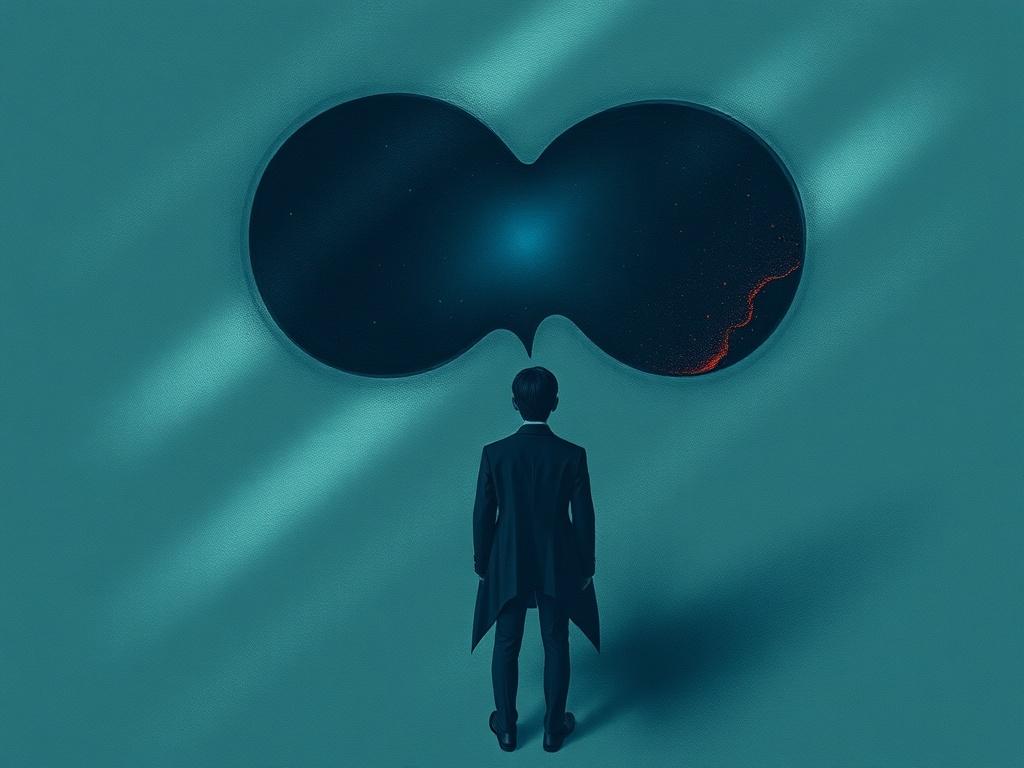
Years ago I let fear of judgment keep me from applying for a writing residency that later proved to be perfectly aligned with my work. For months afterward I replayed small details—the exact phrasing of an email, a perceived lack of experience—and felt a steady, hollow ache of missed possibility. That ache taught me more than the rejection would have: it highlighted how much I valued creative time and pushed me to design my own residency instead of waiting on permission.
The remedy was practical and internal. I set aside two weeks a year for undisturbed writing, negotiated a short leave of absence, and created accountability with a small writing group. Simultaneously, I practiced a simple reframe: acknowledging that the choice was based on reasonable fears at the time rather than moral failure. That double approach—behavioral change plus kinder internal narrative—diluted the regret and converted it into productive action.
Putting regret to work: turning backward-looking pain into forward motion
Regret does not have to be an indictment of character; it can be evidence of learning capacity. The healthiest response is measured and active: own the mistake, extract a specific lesson, and take a small corrective step. This sequence—acknowledge, learn, act—short-circuits rumination and channels emotion into improvement.
One practical routine I recommend is the «regret audit»: once a month, list recent regrets and for each identify a lesson and one concrete action. Keep the list brief, realistic, and focused on what is within your control. Over time the audit becomes a record of growth rather than a register of pain.
Finally, cultivate a stance of compassionate curiosity toward your past self. People make the best decisions they can given their knowledge and resources at the time. When you accept that truth, regret shifts from accusation to information. It remains uncomfortable, but it becomes a tool rather than a trap, helping you design a future with fewer avoidable pains and more intentional choices.